A monthly technology review should make the next decision easier. A large export of tickets or device statistics is not enough if no one can explain what needs attention and who will address it.
Make the next service review easier to act on
Bring specific exceptions back with business context and evidence of what changed.
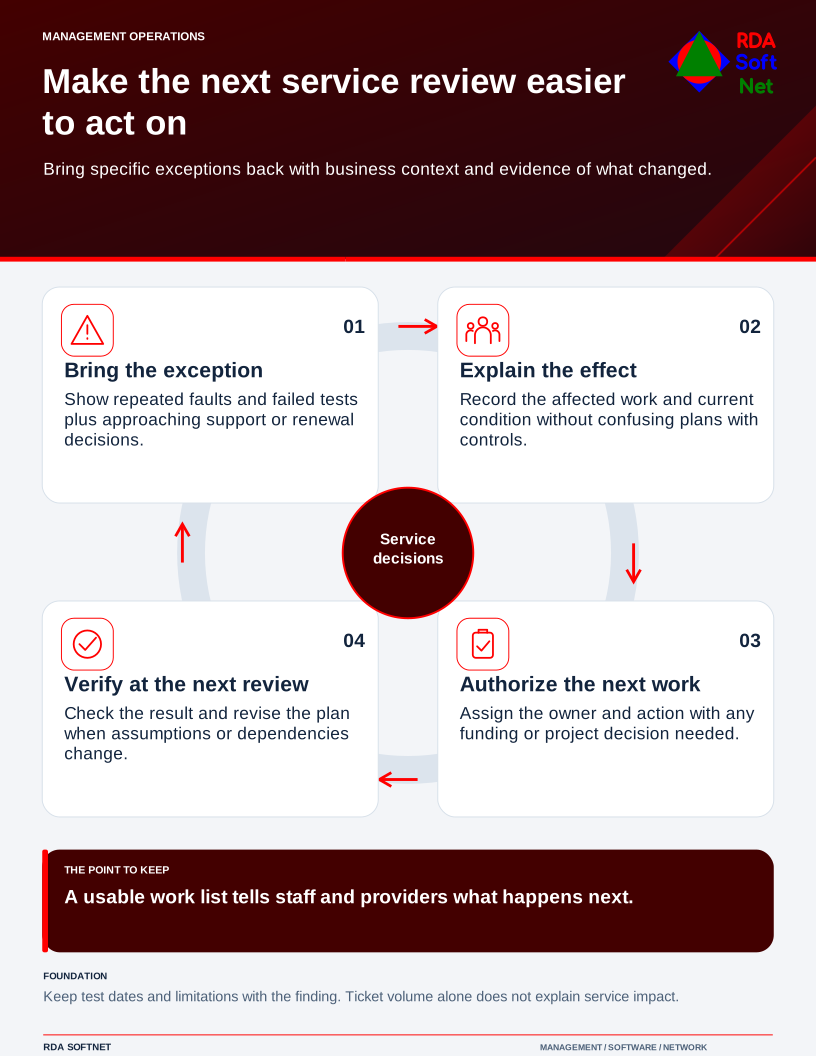
Bring the important exceptions
Review unresolved incidents, repeated support problems, failed or overdue updates, recovery-test results, unsupported equipment, staff changes and approaching renewals. Include information from the department owners and outside application providers. A technically healthy device can still support a workflow that is failing the people using it.
Keep implemented controls separate from proposed work and accepted exceptions. For each important issue, record the affected service, operational effect, accountable owner, next action and decision needed. Evidence should be specific enough to revisit: the test performed, result, relevant date and remaining limitation.
NIST’s CSF small-business resources provide a common reference for organizing cybersecurity responsibilities. RDA connects those responsibilities to the organization’s work records and review, rather than treating a framework label as evidence that a control is operating.
Keep the budget and the work connected
Carry improvements into the roadmap, with the cost, dependency and timing needed for approval. Some items belong in routine operations; others need a scoped project or a procurement decision. State that difference clearly.
Check that documentation, vendor contacts and recovery instructions match recent changes. Include coverage for the absence of a key person, not only the usual support arrangement. Review important security alerts and continuity findings with the people who can authorize the follow-up.
End with a work list that staff and providers can use. The next review should establish what was completed, how it was verified and which conditions changed. That record helps an internal IT director or a new staff member pick up the work without having to reconstruct months of conversation.
Review knowledge and coverage
Check for responsibilities concentrated in one person, planned leave, upcoming retirement and changes in the team. Give gaps in documentation, cross-training and succession planning an owner and a next action. Review the coverage within RDA and the client organization together.
Use system results to decide the next action
RDA's IT Systems are in place and their operating information supports the work. We are developing how selected statistics are presented on this website. The patch reporting preview and network reporting preview show the kind of presentation visitors can expect. Illustrative examples are labeled separately from measured results.
A useful review connects each result to its period, covered systems, important exceptions and next action. A patch percentage needs the device group and the definition of current; a monitoring result needs the affected service and the response. Carry unsupported conclusions or missing data as a limitation to resolve, using the reporting guidance.
Include IPv4 and IPv6 coverage, product and vendor reassessment and changes in people or services. Assign the operational effect, owner and decision date. Leaving those questions undefined can turn a routine change or renewal into an urgent interruption.