
A dashboard can show that a control is installed without showing whether anyone is handling the results. Establish which events matter, where they are collected, who reviews them and what happens when a response is needed.
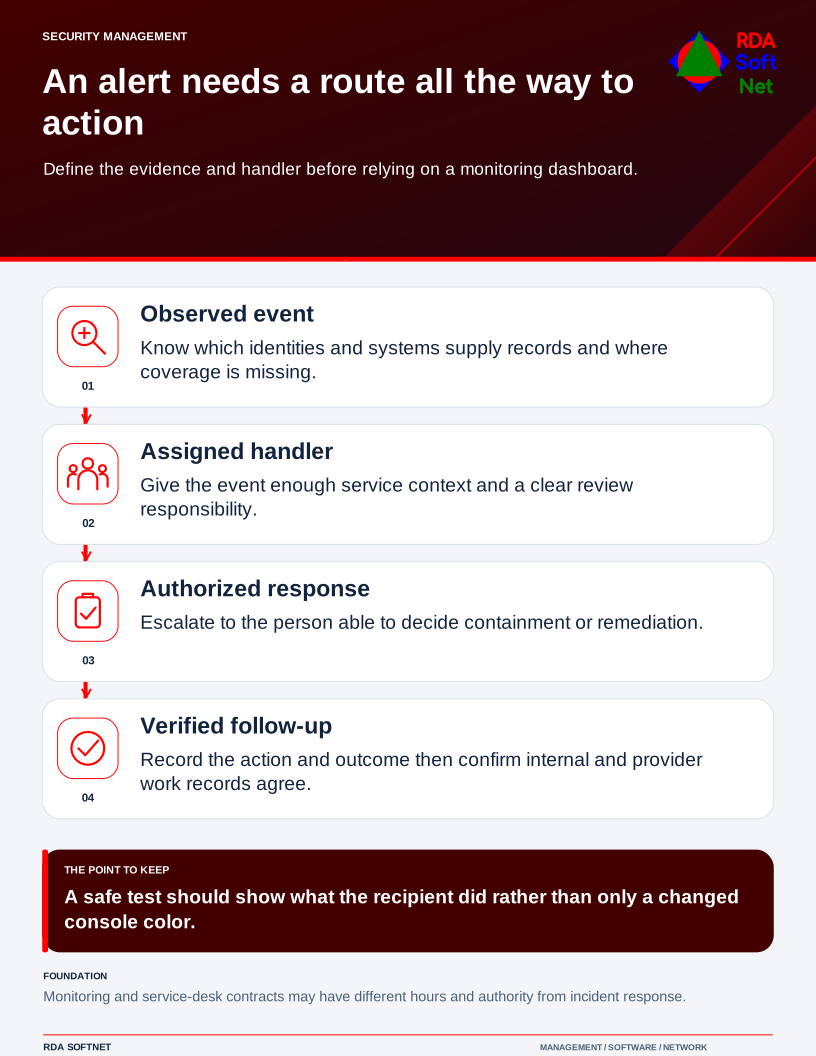
An alert needs a route all the way to action
Define the evidence and handler before relying on a monitoring dashboard.
Define coverage in operational terms
Include the relevant identities, endpoints, email services, network equipment, cloud applications and backups. Different tools see different activity. Record collection gaps, retention periods, licensing limitations and the systems that cannot provide the evidence you would like.
Agree the scope and response arrangement with the provider and the organization. A monitoring service, a service desk and an incident-response team may have different hours and authority. Do not assume one contract or product automatically supplies all three.
NIST’s incident-response recommendations connect detection and response with preparation and recovery. In practice, an alert needs a named handler, enough context to assess it and a route to an authorized decision.
Check that the handoff works
Use safe, agreed tests to confirm alert delivery and escalation. Verify time settings, asset identity, contact details and access to relevant logs. A test should establish who received the event and what they did with it, not only that the console changed color.
Keep vulnerability findings connected to work records. CISA’s known-exploited-vulnerability catalog is one input to prioritization; the organization’s exposure and service importance also affect the response. Record an owner, target and verification for remediation or an approved exception.
Carry recurring issues into the service review, update the incident procedure and confirm the controls after important system changes. Check that provider and internal work records agree on the action, owner and result, including anything still awaiting an authorized decision.
Connect the monitoring result to the response
RDA's monitoring and escalation systems are in place. The reporting preview shows how selected results could appear on this website as that presentation is developed. An illustrative display explains what to expect; dated operating results identify the actual period and coverage.
Look for the service affected, the event, its handler, the action taken and anything still awaiting a decision. Include changes in collection and IPv4 and IPv6 visibility when the environment changes. A clear review route prevents an unresolved alert or coverage gap from becoming a forgotten item on a dashboard.