Managing technology as part of your team.
RDA works as or with your IT department. Our operating model explains how assigned responsibilities become coordinated work: understand the need, agree on priorities, implement and verify changes, preserve the knowledge and keep services operating. Workflows, IT systems, controls and evidence connect daily support to lifecycle planning and your budget.
HOW
PROOF
Managing priorities and resources together.
RDA becomes part of your team and the way your organization operates. We work with your staff and existing vendors to make the most of the systems and investments already in place. Your management team and ours set priorities and direct the effort around your goals, budget and available resources.
Keep communication open.
We want everyone talking to us about anything that affects technology or operations. Bring us questions, concerns and ideas early. We use that information to understand your needs and work with management to decide how and when they are addressed.
Plan and prioritize together.
Daily operations, maintenance, projects and future improvements are considered together. We look for ways to make existing systems work better and extend their useful life. With management, we decide what needs attention now, what can be planned for later and where changes, replacements or additional expertise are needed.
Keep responsibilities and authority aligned.
Your organization retains ownership of its information and client-owned assets and authority over organizational policy and funding. Software, subscriptions and proprietary materials remain subject to their applicable ownership and licensing terms. Together, we agree who is responsible, who can make operational decisions, the access needed and when approvals are required. These arrangements adjust as priorities, responsibilities and resources change. Decisions and responsibilities are documented so everyone knows how to proceed.
Keep the basics covered.
Security, continuity, maintenance and applicable compliance requirements remain part of daily management throughout the technology lifecycle. Documentation, review and evidence support that effort while improvements and replacements are planned alongside ongoing operations.
Plan for ongoing support.
We coordinate support with your staff and existing vendors, agreeing who to contact and how urgent needs are handled. Your team and ours review these arrangements as operations and resources change, keeping ongoing management, support and planning connected to your organization's needs.
One IT department, with clear roles
An outsourced IT department carries the connected roles that a larger organization would staff internally. In a hybrid arrangement, your internal team retains its roles and RDA supports those assigned to us. In either case, people need to know who owns each responsibility and who coordinates work that crosses systems or providers.
The RDA Operating Model
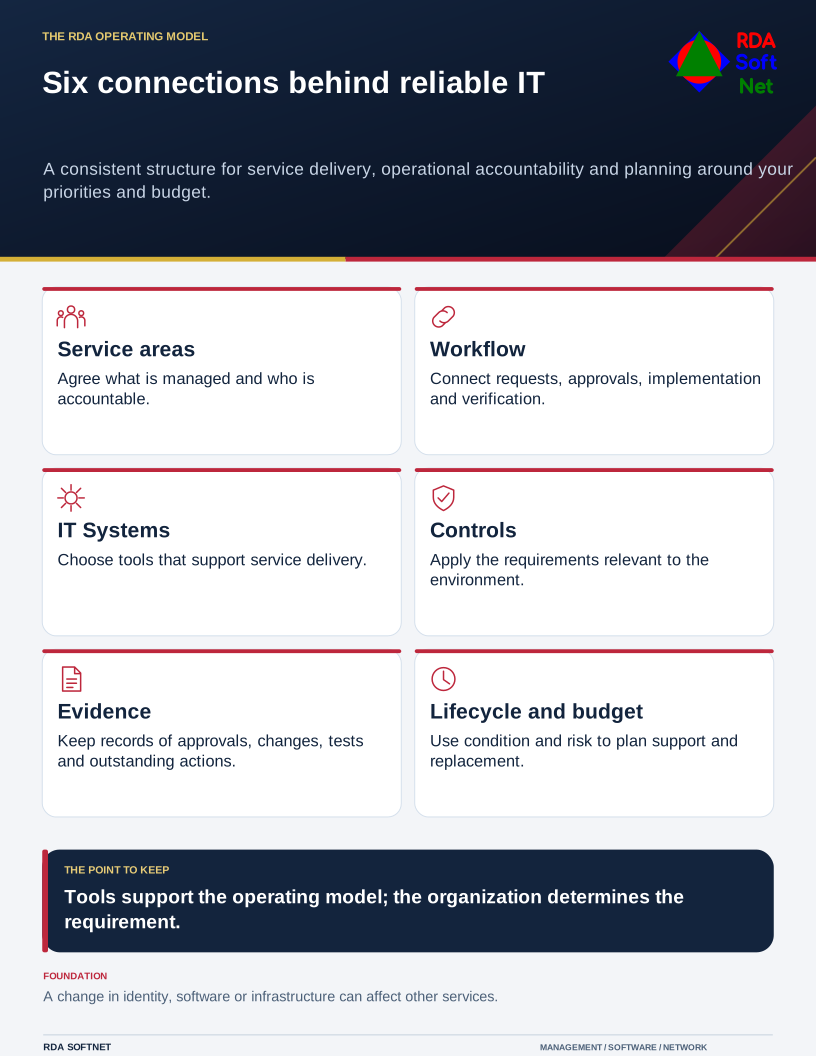
Service Areas define what we manage. Workflows, supporting technology, controls and evidence give us a consistent way to deliver, maintain and account for those services. Lifecycle planning and budget help us make the most of existing investments and allocate resources according to your organization's priorities.
Service Areas
What we manage
Workflow
How we do it
Controls
Which safeguards apply
Evidence
What the records show
Lifecycle & Budget
How we plan ahead
Service Areas
Defining what needs to be managed
RDA organizes its services into thirteen areas across Management, Software and Network. These give your team and ours a common way to understand the systems and services already in place, coordinate responsibilities with your staff and vendors and set priorities around your budget and available resources.
- Clear ownership and responsibilities
- Visibility across systems, services and vendors
- Consistent service descriptions
- A common language for planning and daily operations
Workflow
Coordinating service delivery
Workflows connect requests, projects, changes, maintenance, reviews and replacements. They identify responsibilities, approvals and next steps and keep decisions and results documented.
Recurring activities are planned alongside projects and daily support. Agreed timing, responsibility and completion records keep maintenance, access reviews, recovery tests, renewals and budget decisions visible. Deferred activities retain a next action and revised timing.
Before a significant change, we establish the dependencies, readiness checks, implementation window, acceptance criteria and recovery approach. We verify the service after the change and document any remaining actions.
Service review and follow-through- Ownership and approvals
- Preparation and change control
- Implementation and testing
- Documentation and handoff
- Scheduled review and improvement
IT Systems
Tools that support service delivery
RDA uses technology to automate, monitor, protect, document and measure services and workflows. The IT Systems grow and adapt with your organization's needs and our own operating requirements.
Changes in regulations, business conditions, security requirements and technology influence the tools and integrations we use. We review what is already in place, update and improve it and add capabilities to meet current and future needs.
- Service management and remote support
- Monitoring and network visibility
- Endpoint and threat protection
- Identity and access
- Vulnerability management
- Backup and recovery
- Email, cloud and Microsoft services
Controls & Requirements
Putting requirements into practice
Controls are the safeguards, procedures and checks used to meet client, regulatory and security requirements. We start with the controls and practices already in place, identify the requirements that apply and work with your team to set priorities and build a plan for the long term.
Our experience spans more than 30 years and includes supporting organizations with demanding compliance requirements. We use established methods to move improvements forward at the pace your organization needs. Practical steps, clear documentation and regular review keep the process manageable alongside daily operations.
- NIST Cybersecurity Framework
- CIS Controls
- CJIS
- CMMC
- 201 CMR 17.00
- PCI DSS
- ISO-aligned controls and client policy
Evidence
Showing what was done
Audits require evidence to demonstrate compliance with applicable client, regulatory and security requirements. Evidence records what was done, what changed, who approved it, what was tested and what still needs attention.
These records also support daily accountability, incident reviews and future decisions while preserving knowledge about your systems and services. We use governance, risk and compliance (GRC) tools to connect requirements, controls and supporting evidence, track outstanding actions and prepare for audits and compliance reviews.
- Tickets and change records
- Inventories and configurations
- Scan and patch results
- Backup and recovery tests
- Access reviews and approvals
- Training, policies and procedures
- Project and lifecycle records
- Service and cost records linked to the responsible service, project or department
Lifecycle & Budget
Planning needs, timing and costs
RDA connects your technology inventory, condition, risk and dependencies with plans for maintenance, improvements and replacement. We bring recommendations, timing and expected costs into project planning and capital and operating budgets so your team can see what is coming and make informed decisions.
- Current assets and dependencies
- Known risks and end-of-life dates
- Upcoming projects
- Capital and operating forecasts
- Fewer surprises
Bringing it together
RDA does not look at technology as a collection of unrelated products. We take responsibility for the technology environment as a whole, including how the systems, services, people and vendors work together.
Your people have their own responsibilities. Our job is to keep technology running reliably and prevent avoidable interruptions. When an issue occurs, we investigate, coordinate any vendors involved and fix it. We won't tie up your people walking through troubleshooting steps with us.
A user's access to an application can depend on identity, data, servers, cloud platforms, networks, communications, security and backup. A change in one area can affect many others. The operating model helps us understand those relationships so changes are planned, tested, documented and supported across the whole environment.
What we manage → How services are delivered → The tools we use → The requirements that apply → The evidence we maintain → How we plan ahead.
Working as or with your IT department.
RDA can support your internal IT staff, provide additional expertise, coordinate specialists and vendors or serve as your IT department. In each arrangement, the operating model connects daily service delivery with documentation, accountability and planning.
Six connections behind reliable IT
A consistent structure for service delivery, operational accountability and planning around your priorities and budget.
RDA programs
See how Technology Portfolio Governance (TPG) and the RDA Program Framework connect priorities, responsibilities, daily support and the longer-term plan.