Built Through Change.
Serving Since 1992.
RDA started with software development and application support. As client needs changed, our responsibilities expanded into networks, public safety, municipal technology, cybersecurity, cloud, communications, lifecycle planning and the broader responsibilities of an IT department.
SINCE
1992
The idea behind our logo
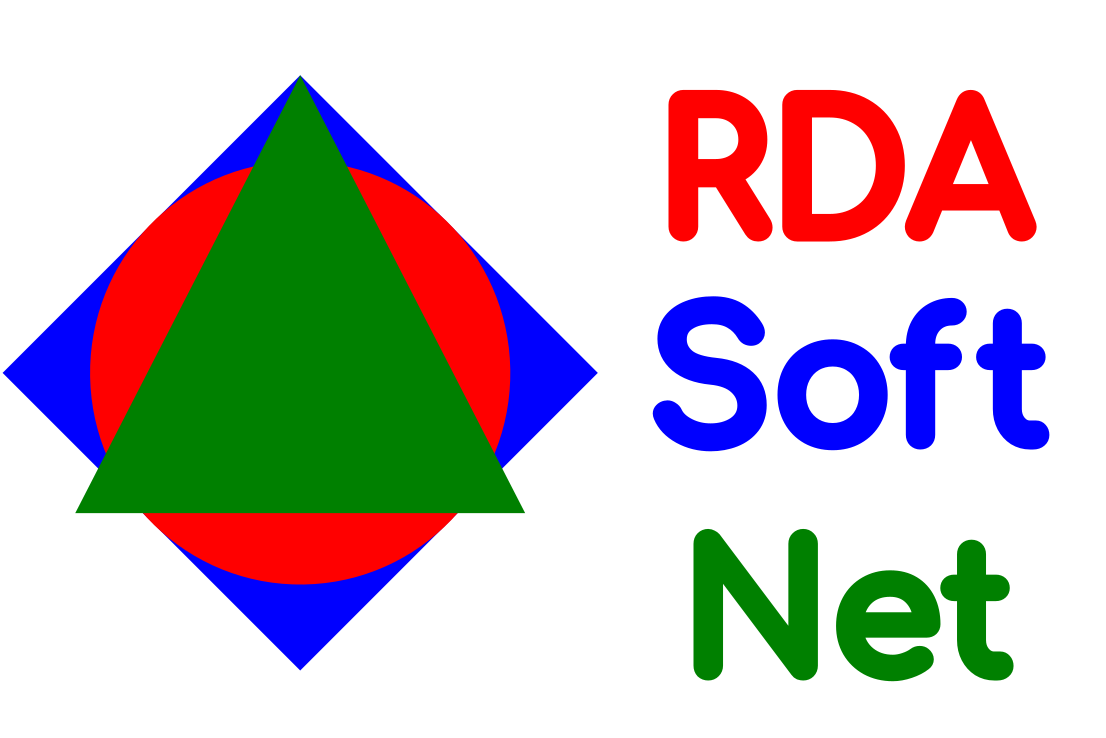
Red, green and blue combine to create a full palette of color. A circle, a square and a triangle combine to create more complex forms.
Our logo brings those basic elements together to express an idea that is foundational to RDA: start with what you have, bring the right elements together and figure out how to create what is needed.
Bring us the problem.
Our clients know they can bring us something that needs attention. We take the time to understand it, find the right expertise and help get it resolved. We don't use “out of scope” to end the conversation. Priorities, budget and available resources guide what can be done and when.
We once helped get a client's elevator repaired. We found the right vendor, followed up and encouraged them to get it fixed. The vendor performed the repair. We took responsibility for helping our client get it done.
There are countless stories like that in our history. It is part of being on the client's team: take an interest, follow through and help find a way forward.
Experience explains the operating model.
The timeline traces how RDA's responsibilities expanded from software and application support into the integrated services of an IT department. Historical technologies describe that experience; current services are planned around each client's needs.
From software development to a broader IT department
The work grew with our clients
In the 1990s, RDA was primarily a software-development company. We built, modified, integrated and supported business applications. FoxPro was one part of that work, along with products and platforms such as SBT, FoxMed and FoxDent. In healthcare, that meant supporting small hospitals, health centers, larger physician practices and the workflows around the applications they depended on.
The same problem kept getting larger
Applications depended on computers. Computers depended on networks. Networks depended on servers, communications, security, vendors, facilities, budgets and people. Over time, RDA's role naturally expanded from solving application problems to coordinating the complete technology environment.
Different technologies. A consistent purpose.
The technology changed as RDA's role expanded around the needs of the organizations we support.
Software Development Roots
RDA begins as a software-development and application-support company.
- Custom business software and application development
- Accounting and line-of-business systems, including SBT
- Healthcare applications including FoxMed and FoxDent
- FoxPro as one development platform among the tools used
- Application support, reporting, integration and problem solving
Software Meets Infrastructure
As applications become networked, supporting the software increasingly means supporting the environment underneath it.
- Windows and Novell environments
- Servers, workstations, cabling and network infrastructure
- Application deployments and client/server systems
- More integration between software, data and communications
Public Safety Begins
RDA's public-safety work begins, adding environments where reliability, communications, shared systems and operational continuity are critical.
- Police and public-safety technology support
- Operational and multi-agency environments
- Communications, networks, applications and field requirements
- Technology decisions tied directly to public safety operations
Integration Becomes the Work
Technology becomes less about one product and more about making many products, vendors, locations and processes work together.
- Business-system integration and data movement
- Broader server, network, workstation and application support
- Vendor coordination and complex troubleshooting
- Growing emphasis on documentation, continuity and lifecycle
Municipal Technology Expands
Municipal government becomes a larger part of RDA's work, bringing together departments, public-service missions, budgets, regulations, vendors and long planning cycles.
- Town government and department technology
- Budgeting, lifecycle planning, projects and procurement
- Cybersecurity, policy, compliance and continuity
- Coordination across municipal, public-safety and regional systems
A Connected IT Operating Model
RDA now works with or as the IT department across Management, Software and Network. We still close the gaps between systems and organizations.
- Cybersecurity, identity, cloud, backup, monitoring and communications
- Service Areas, workflow, controls, evidence, lifecycle and budgeting
- Municipal and multi-jurisdictional public safety
- Manufacturing, production, transportation, utilities and construction
- Automation and AI as another technology layer to manage responsibly
The technology changed. The approach didn't.
Products come and go. Platforms change. Organizations grow. The underlying RDA approach has remained remarkably consistent.
Understand the organization
Learn how the people work, what the organization is trying to accomplish, what can go wrong and what constraints actually matter.
People and process firstManage the complete environment
Bring applications, data, infrastructure, vendors, communications and process together instead of treating them as isolated products.
Integrated by designStay involved long term
Support, document, improve, budget, replace and adapt as the organization and the technology continue to change.
Management, support and planning for the long termOrganizations we have served
Since 1992, RDA has supported public agencies, businesses and professional practices across a wide range of industries. Those relationships helped shape the coordinated IT services we provide today.
History explains the model we use today.
Management, Software and Network are not three unrelated service categories. They reflect how RDA's work expanded over more than three decades: applications led to infrastructure; infrastructure led to broader operations; broader operations required management, security, compliance, lifecycle planning and evidence. The current operating model connects all of it.
Built through change since 1992
RDA expanded around the changing needs of the organizations it supports.