
The first useful continuity question is often simple: which work cannot wait until the system returns? A department may be able to defer a report but still need to answer calls, receive requests, or record time-sensitive activity.
Can the fallback survive the same failure?
Work outward from essential tasks to the services and people needed to continue them.
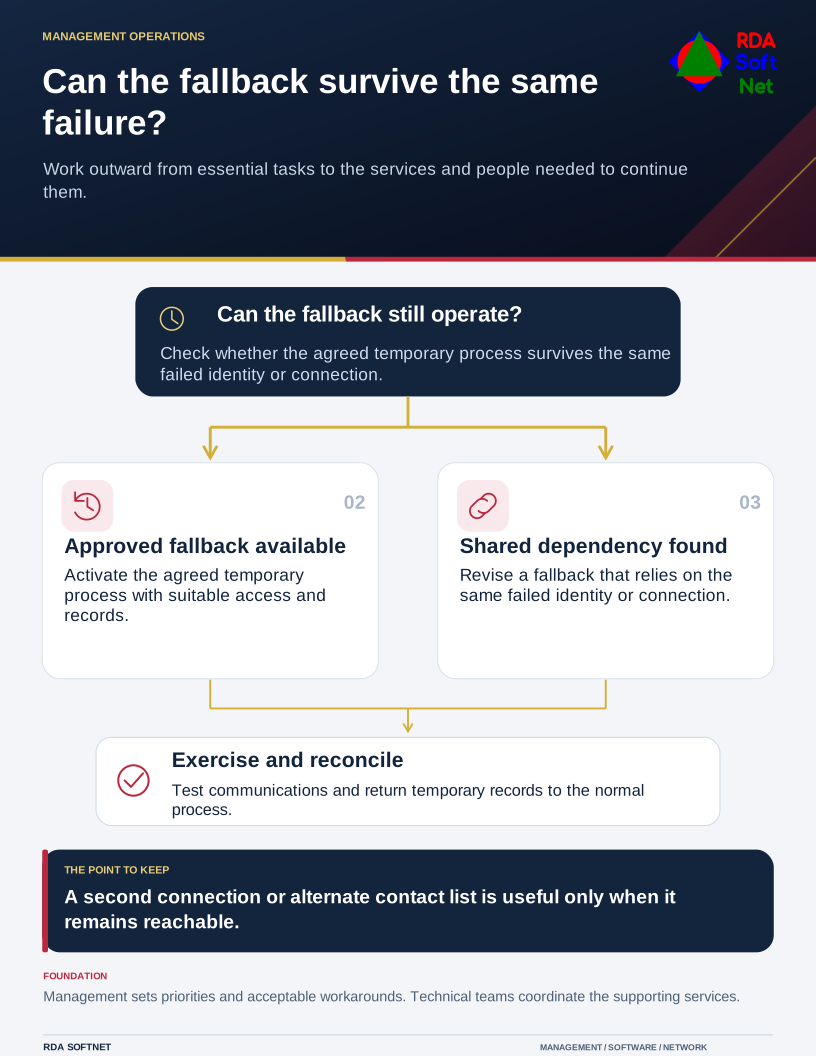
Work from the interruption outward
Identify essential tasks and the people responsible for them. List the applications, identities, devices, connectivity, voice services, power, vendors, and information those tasks need. Agree the tolerable interruption and the point at which a temporary procedure begins.
Check whether the fallback depends on the same service that is unavailable. A contact list stored only in the affected tenant or a replacement internet link sharing the same last-mile path may not provide the intended independence. Keep necessary instructions and contacts accessible through an approved alternative.
NIST’s small-business CSF resources include recovery and organizational responsibilities as part of risk management. RDA uses the operational discussion to connect those responsibilities to the actual work of the organization.
Exercise the temporary procedure
Try an agreed scenario with the staff who would use the plan. Check communications, authorization, alternate access, and the ability to reconcile temporary records when normal systems return. Protect information in the workaround just as deliberately as in the normal system.
Technical backup recovery is one part of the arrangement. During a suspected security incident, the incident lead may need to approve isolation, restoration, or reconnection. Define those decision points before an outage forces a rushed choice.
Record gaps from the exercise with an owner and a target. Management establishes priorities and acceptable workarounds; the technical lead coordinates the necessary provider work and system changes. Review the plan when services, staff, locations, or important dependencies change, and keep vendor escalation contacts current.