
A request for new equipment often begins with a problem that has not been fully described. A department needs reports sooner, a server is becoming unreliable, or staff are entering the same information twice. The useful starting point is the work that needs to improve.
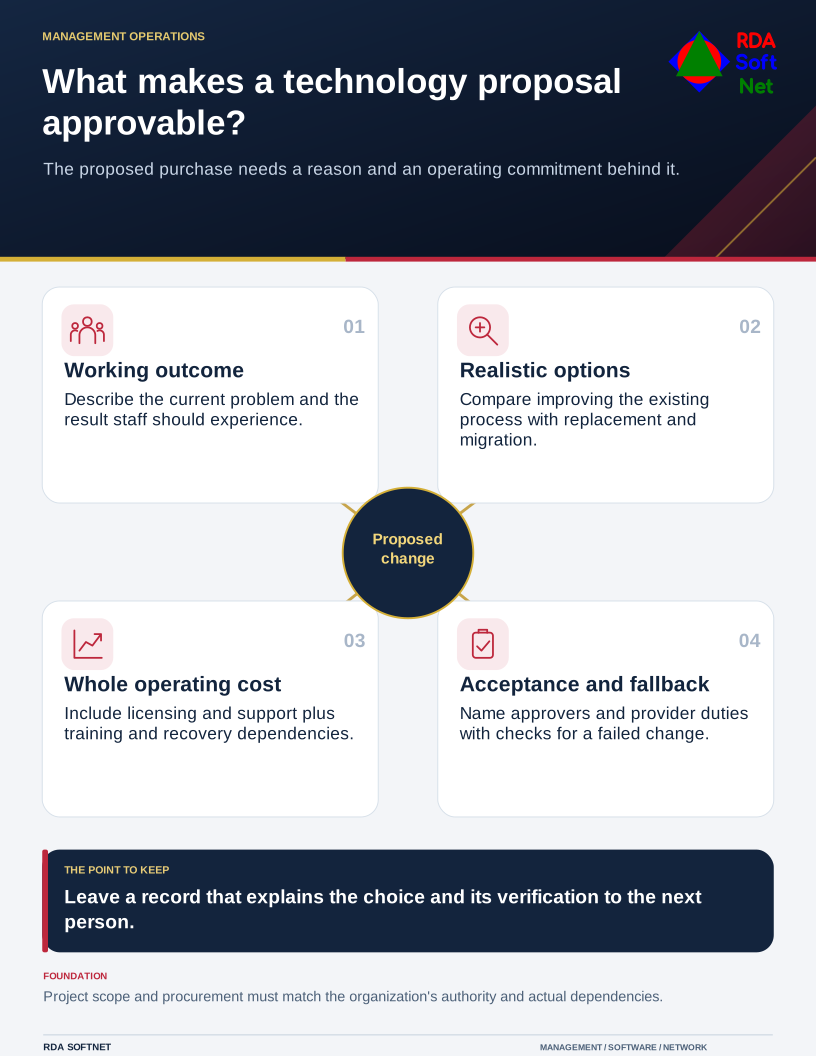
What makes a technology proposal approvable?
The proposed purchase needs a reason and an operating commitment behind it.
Write down the decision
RDA works with the responsible staff to establish the present condition, desired result, constraints, and consequences of waiting. Include the people who will use the system and the providers whose applications depend on it. A proposed purchase should explain what it will accomplish, who will own it, and what must be in place first.
Compare realistic options, including improving the existing process. Account for migration, licensing, connectivity, training, support, recovery, and eventual replacement. Separate the initial project from its ongoing operating costs. Municipal and other public organizations also need their authorized procurement process reflected in the schedule.
Make implementation reviewable
Agree scope and approval before committing to changes. Identify the service owner, technical lead, vendor responsibilities, maintenance window, acceptance checks, and fallback. Those responsibilities matter as much for a small configuration change as for a large replacement, though the paperwork should match the work.
The finished record should let another person understand what changed and how the result was verified. Carry unresolved items into a named work list rather than treating installation as completion. NIST’s small-business CSF resources provide a useful reference for connecting risk decisions with operational priorities.
Review the plan against the asset lifecycle and the latest service review. An approved plan should change when the organization’s needs or dependencies change, with the reason recorded.