
The colleague who knows the monthly submission process is away. A document exists, but its first step says to open the usual spreadsheet. Nobody is certain which copy that means, where the supporting report comes from, or who approves the result.
Release an instruction that survives absence
Publication needs clear authority and a safe independent test.
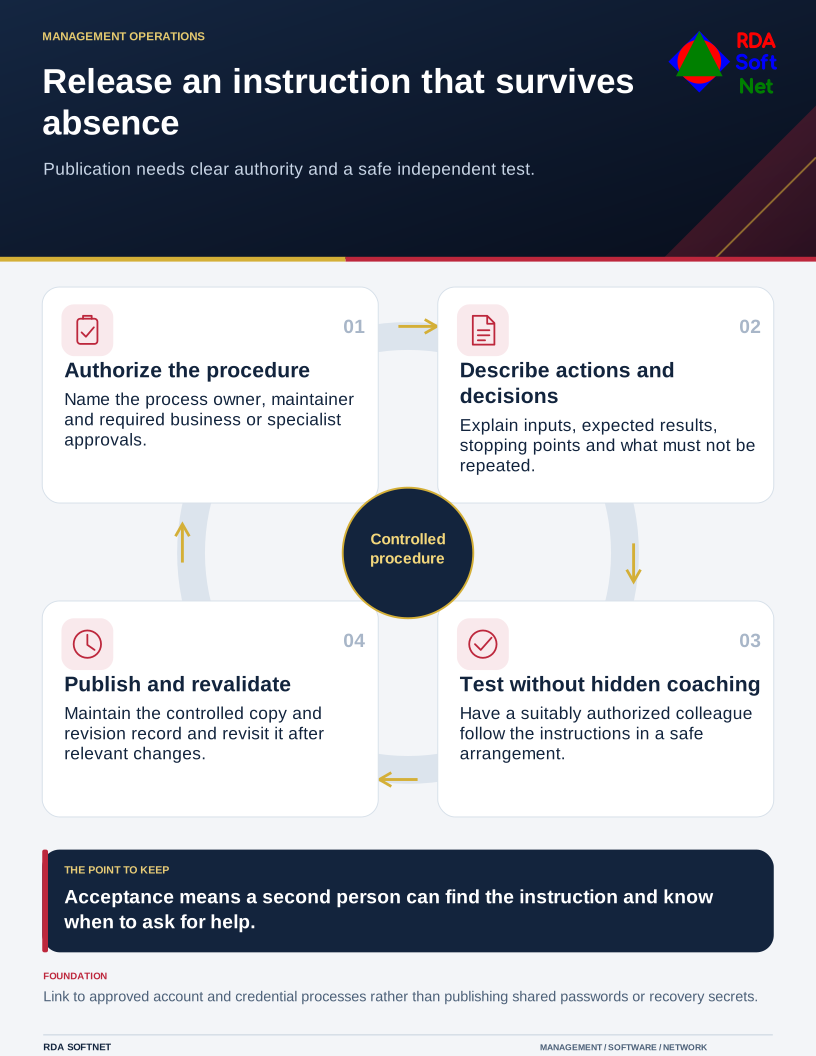
A useful operating procedure closes those gaps before someone has to improvise. It describes a defined task for an intended reader, with the authority, inputs, access, and evidence needed to complete it. Start with work that becomes difficult when its usual owner is absent.
Establish who can publish the instructions
Name the process owner who can confirm how the work should operate. Assign someone to maintain the instructions and identify any required business, IT, finance, or specialist approval. The person who writes the document may need help from several people who each understand part of the process.
State when the procedure applies, what must be available beforehand, and what a completed task looks like. Identify required roles and approved applications. If the task needs an account or permission, link to the request process; do not substitute a shared password in the instructions. The onboarding guide connects authorized roles with usable access.
Keep passwords, recovery codes, and other secrets in the approved credential vault. A procedure can identify the controlled reference or the support contact without exposing the secret to every reader.
Write for the person doing the work
Use steps in the order someone performs them. Explain the input, action, expected result, and what to do when the result differs. Include decisions and stopping points: who authorizes a correction, what must not be repeated, and when an uncertain result should be escalated.
For example, an unsuccessful upload may require checking whether the service accepted the original submission before trying again. An instruction to keep clicking until it works can create duplicate records or payments.
W3C's clear step-by-step instruction guidance recommends complete, understandable steps available where they are needed. It is supplemental accessibility guidance, not a separate compliance certificate. Use descriptive headings, meaningful links, and text explanations alongside screenshots. The accessibility guide helps evaluate the actual task and publishing format.
Store the approved procedure in a known, organization-controlled location with appropriate read and edit access. Give it a title, owner, version or revision date, and review trigger. The file collaboration guide covers those ownership and access arrangements. Retire or clearly identify superseded copies so a search does not offer conflicting instructions.
Let another person find the missing steps
Have a suitably authorized colleague follow the working version without the author supplying the unrecorded details. Use a safe test arrangement for consequential actions; do not create live transactions merely to test the wording. Check whether the reader can find the inputs, complete the decisions, recognize success, and stop safely when something goes wrong.
Record the problems, revise the procedure, and confirm approval before publication. Include the support handoff and where completion evidence belongs. Recheck after an application change, altered approval rule, significant error, or change in responsibilities.
The strongest acceptance check is ordinary: a second person can find the current instructions, perform the authorized task, and explain when to ask for help.