
A procedure known by one person is a dependency, even when that person is generous with their time. Leave, a change of role, or an urgent competing task can make the gap visible at an inconvenient moment.
Can tomorrow's cover find and use it?
A procedure becomes useful when a colleague can work without the author filling in missing decisions.
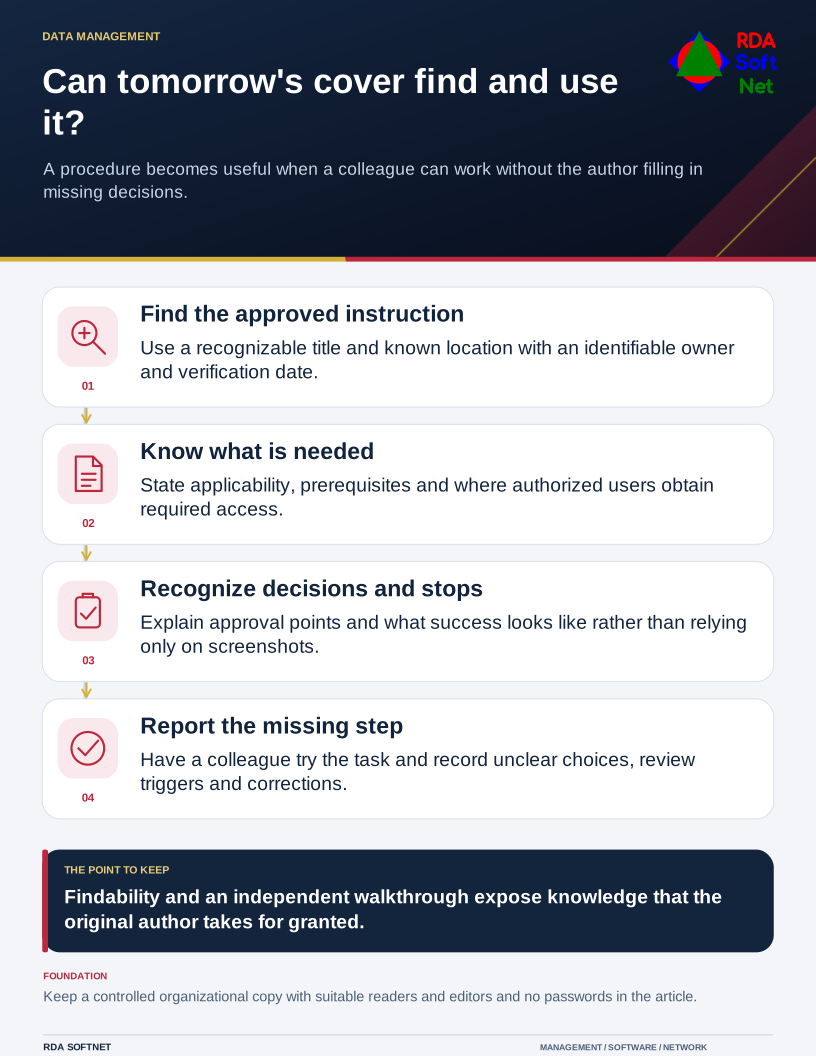
Start with a task somebody else may need to cover tomorrow. Document the steps and decisions needed to complete it, then ask a colleague to try. That produces a more useful first knowledge article than buying a platform and waiting for people to fill it.
Write for the person doing the work
State when the procedure applies, what the person needs before starting, and what a successful result looks like. Include the points that require approval and the conditions that should stop the task for review. A sequence of screenshots alone can hide those decisions.
Use meaningful headings, short instructions, descriptive links, and accessible illustrations where helpful. W3C's page structure guidance explains how well-structured content supports navigation, including for assistive technology users. Apply that principle to an internal guide as carefully as to a public page.
Keep secrets out of the article. Link authorized users to the approved credential process rather than placing passwords or recovery codes in a general library. Detailed configurations and sensitive operational procedures also need an appropriate audience.
The file collaboration guide helps choose a location owned by the organization rather than a personal folder. Identify who may read, edit, approve, and publish the instructions. One authoritative copy is easier to maintain than several attachments with uncertain status.
Give the instruction an owner
Record the responsible role, last verification, and what should trigger another review. A system change, revised approval rule, or new provider can invalidate a procedure before its scheduled review date. Encourage staff to report the step that no longer matches reality.
Version history can help explain and reverse changes when configured. Microsoft's SharePoint restoration guidance describes that capability for versioned lists and libraries. It does not decide which version is approved for the work; that remains part of the publishing process.
Provide a simple contribution route. A knowledgeable employee may explain the task well in conversation without wanting to write a polished article. Another person can prepare the working version, with the task owner checking the result.
Test findability and usefulness
Ask a colleague unfamiliar with the procedure to locate and use it under appropriate supervision. Notice the search terms they try, missing prerequisites, unclear choices, and points where they need to ask the author. Correct those gaps before treating the document as a completed handover.
Use verified instructions in onboarding, support, and recurring work. Review repeated questions for missing or confusing guidance. The data quality guide also helps keep definitions and source information consistent across related articles.
A small library of tested, maintained procedures can strengthen internal capability more effectively than a large collection nobody trusts. Keep the content tied to the work, and retire obsolete instructions through the approved records process.