
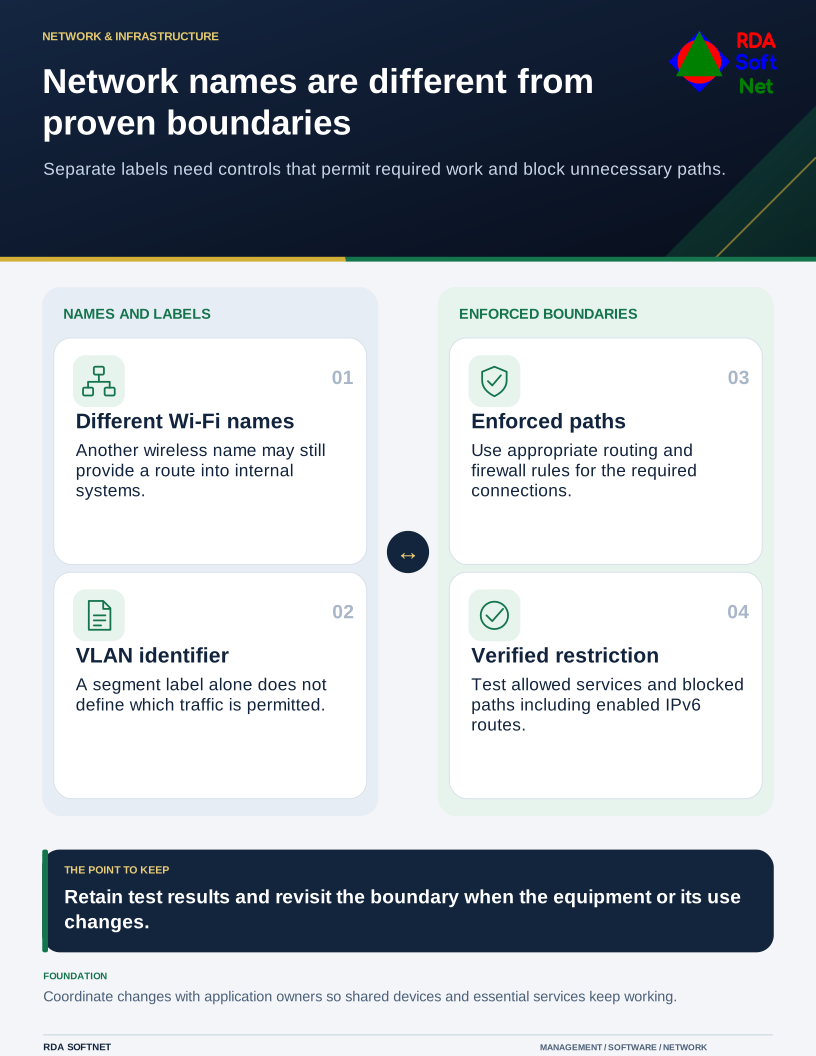
Two Wi-Fi names do not necessarily mean two separate networks. A visitor can be on a different wireless name and still have a route to office printers, servers, or device-management pages. The intended boundary needs to be enforced and tested.
Network names are different from proven boundaries
Separate labels need controls that permit required work and block unnecessary paths.
Describe permitted connections
List the systems and the traffic that must pass between them. Guest internet access, business workstations, servers, building equipment, and network administration have different purposes. Define the approved paths before changing switches, firewalls, or wireless access points.
Use the controls appropriate to the design, which may include VLANs, routing rules, firewall policy, and client isolation. A VLAN label alone is not the security decision. CISA’s infrastructure-hardening guidance includes enforcing network segmentation with network-device controls. Zero-trust access adds identity and resource decisions; it is not achieved simply by separating guest Wi-Fi.
Test the work and the restriction
From each relevant network, verify required services and attempt the connections that should be blocked. Include management interfaces, internal name resolution, shared devices, and any approved exception. Retain the results and update the network record. Test IPv6 paths as well where IPv6 is enabled; an unreviewed path can undermine an otherwise sound design.
Plan the change with the application owners. A label printer, voice device, or access-control system may depend on a connection that is easy to overlook. Agree a maintenance window and fallback rather than discovering the dependency during business hours.
Assign responsibility for the equipment, configuration, vendor work, and updated network record. Include the boundary checks in ongoing service review and revisit them when equipment or the use of a space changes.