
A zero trust proposal is difficult to approve when it reads like a collection of product names. Management needs to know which service will change, why the change matters, who will be affected, and how the team will confirm it works.
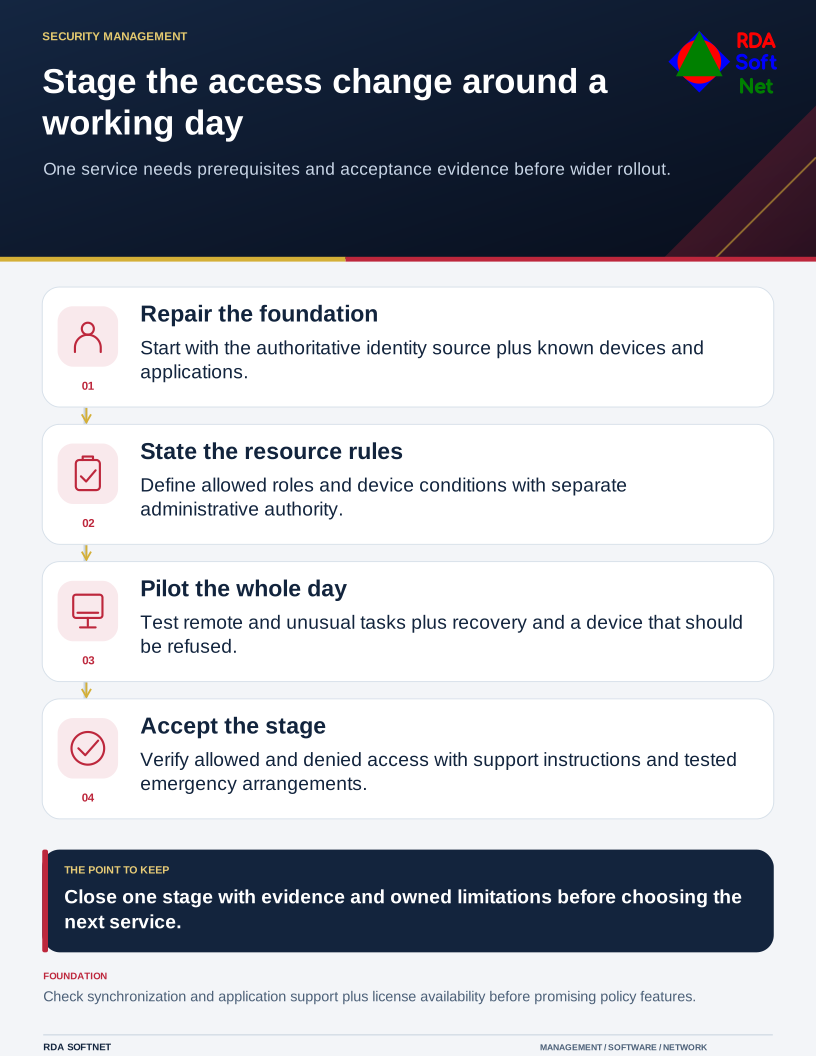
Stage the access change around a working day
One service needs prerequisites and acceptance evidence before wider rollout.
Choose one application or workflow and write the access rules in ordinary language first. For example, only authorized finance staff may use a sensitive application, through approved devices and sign-in methods, with administrative work handled separately. That is a starting requirement engineers can turn into a plan.
Repair the prerequisites
Confirm the account source, application inventory, device management, and responsible owners. If accounts are created inconsistently or devices cannot be identified reliably, resolve that before building policies around them. An onboarding process should produce a known identity with approved role access, not an improvised collection of permissions.
NIST's zero trust architecture distinguishes authentication and authorization and focuses protection on resources. Use the zero trust guide to translate those principles into questions about the actual service.
Document dependencies such as directory synchronization, application compatibility, and license requirements. A named policy feature in a sales presentation may not be available in the organization's current subscription or supported by every application.
Pilot the complete working day
Select a small representative group, including people who work remotely and staff with less typical tasks. Test sign-in, ordinary work, mobile use where permitted, administrative activity, and account recovery. Include a device that fails the agreed condition so the team can verify both the restriction and the instructions the user receives.
For stronger authentication, Microsoft's deployment planning guidance is a useful source for method selection and rollout considerations. The plan must also address registration and recovery; a secure sign-in method is of limited help when support cannot safely replace a lost authenticator.
Explain the change before enforcement. People should know what they will see, how to get help, and what happens if their normal method is unavailable. Record exceptions with a reason and an owner rather than quietly weakening the whole policy to accommodate one unresolved case.
Make completion measurable
Use the change planning guide to set acceptance checks and rollback arrangements. Verify that intended users can complete approved work, unauthorized access is restricted, and emergency access has been tested through controlled procedures.
Include the security operations team in the handover. They need to understand new alerts, policy failures, and exception reviews. Staff receiving support requests need the same documentation as the people who configured the system.
Close the stage with evidence and a list of remaining limitations. Only then choose the next service. This creates a repeatable way to improve access without pretending that every system can adopt the same controls at the same time or that a single rollout finishes the organization's security work.