
The last day of employment is also a handover between people, systems, and records. HR knows the departure arrangements. A manager knows which work must continue. IT knows how to change access. The process becomes unreliable when those groups act on different assumptions about timing or ownership.
End the access and preserve the work
The same departure needs two coordinated outcomes.
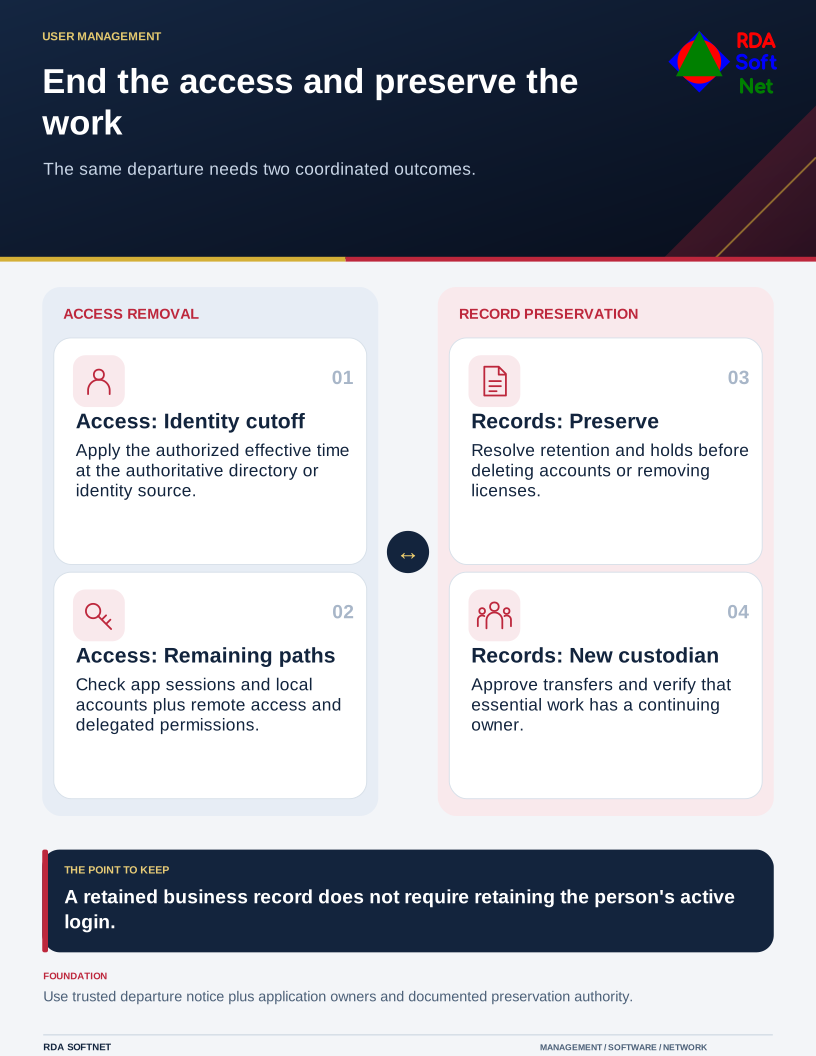
A departure does not imply wrongdoing. Consistent steps protect the organization and the departing person by making it clear when their authority ends and who takes responsibility for the work they leave behind.
Set the cutoff before making changes
Use an authorized notice with an effective time, a contact for questions, and any special handling instructions. Avoid relying on an informal message passed through several people. Identify who can approve access to the former employee's mailbox or files; technical ability to open them is not sufficient authorization.
Start with the directory and identity source, which may be Active Directory, a cloud directory, or another managed system. In a synchronized environment, understand where the authoritative account is maintained. Changing the wrong copy may leave access in place or cause a later synchronization problem.
The offboarding guide connects the account changes with equipment, applications, and verification. A checked box saying “email disabled” is not a complete record of the departure.
Preserve the work without preserving the login
Agree which files, mailbox content, calendars, and business records need a new custodian. Check retention and legal-hold requirements before deleting accounts or removing licenses. Use documented permissions and ownership transfers rather than giving a manager the former employee's password.
Microsoft's former employee guidance separates preventing access from preserving mailbox and OneDrive information. The distinction matters: security action and records preservation need to be coordinated, even when different people perform them.
A shared mailbox or approved delegation may support continuity, but forwarding all mail indefinitely can expose unrelated information. Decide its purpose, recipients, and review date. The mailbox arrangements guide explains that handoff, while data governance addresses retention and access decisions.
Verify beyond the main account
Review remote access, locally managed applications, mobile access, guest invitations, shared links, and any exceptional shared credentials. Transfer or replace application connections that depend on the departing person's identity. Reclaim devices and arrange any remote action according to the organization's device and privacy policy.
Do not assume a central account block instantly terminates every active application session. Microsoft notes that applications can control their own session tokens. The technical team must confirm the relevant service's revocation behavior and take any application-specific steps.
Close the handover with evidence: what was disabled, what was transferred, what was retained, and what remains open. Assign an owner and date to unresolved items. That final check makes the process usable by another member of the computer department and gives the manager confidence that essential work has a clear new home.