
An organization can improve its sign-in protection and still create a support problem if nobody plans for a lost phone, a broken key, or a new employee who cannot complete enrollment. Authentication changes need the same discovery, testing, handover, and review as other changes to an essential service.
Build stronger sign-in around recovery
The normal method and the exception route need to work together.
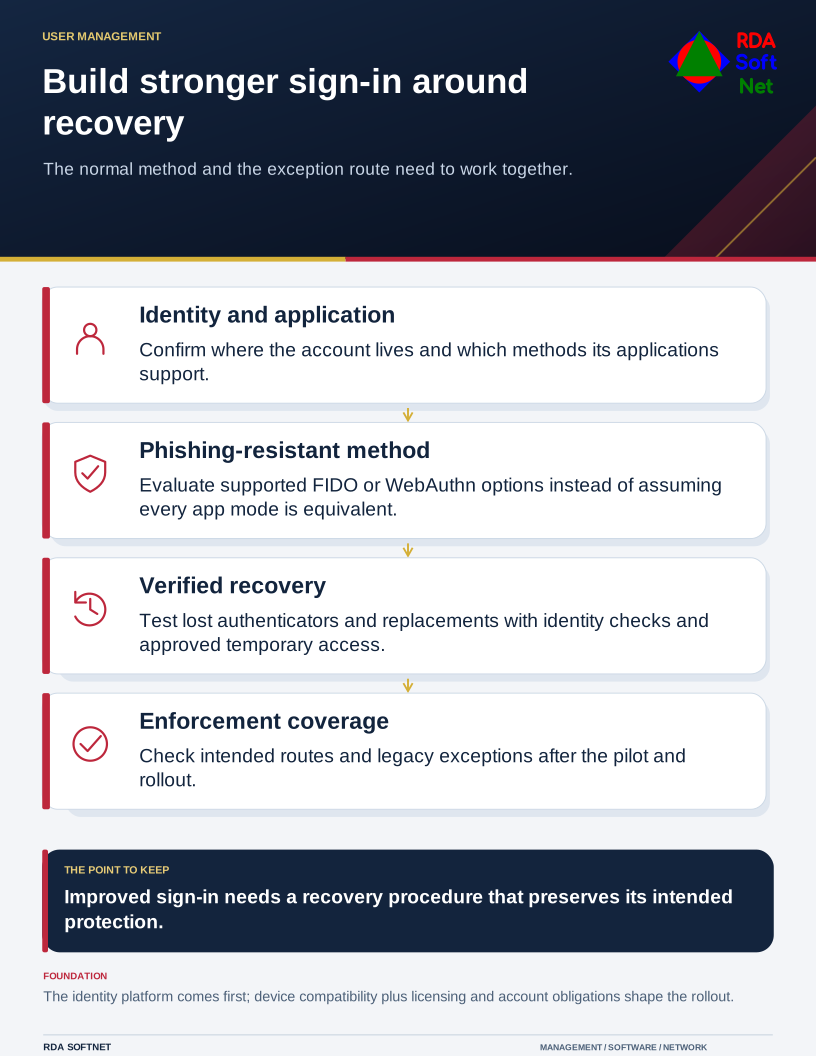
Start with the accounts and applications that matter most. Identify administrators, remote access, email, financial systems, and sensitive records. Confirm where each identity is managed and what authentication methods the application actually supports.
Understand the protection being added
Multifactor methods differ. A text message or app-generated code adds a factor, but a user can still be tricked into entering that code on a fraudulent page. A push approval can also be misused when someone approves a request they did not initiate.
CISA's phishing-resistant MFA guidance explains FIDO/WebAuthn implementations. These methods address a different problem from merely changing how a one-time code is delivered. Check the actual method enabled in the product rather than assuming every feature in an authenticator app provides the same protection.
Our passkeys guide covers the organizational choices around compatible devices, security keys, and recovery. Keep existing protection in place while planning a stronger supported arrangement. A migration should not leave people with fewer controls because the final design is not ready.
Pilot enrollment and recovery together
Use representative roles and devices in the pilot. Include people who work remotely, use shared workstations, have accessibility requirements, or cannot use a personal phone for work. Verify that the proposed method works with their normal applications.
Decide which backup methods are permitted and how they are registered. Define what support staff must verify before replacing an authenticator, who can authorize an exception, and when temporary access expires. An easily obtained reset can undermine the stronger normal sign-in.
NIST's digital authentication guidance addresses authenticator lifecycle events as well as authentication strength. Use the relevant requirements and the organization's obligations to inform the design; a product label alone does not establish the required assurance.
Check enforcement after rollout
Document the policy, covered accounts, exclusions, and support procedure. Test the intended sign-in paths and any legacy application exceptions. Separate administrative identities need particular attention because their permissions can affect other users and systems.
The credential security guide connects the change with account recovery, sign-in monitoring, and user support. The privileged access guide addresses elevated identities and controlled exceptions.
After rollout, review enrollment failures, repeated exceptions, lost-device incidents, and signs of unexpected access. Update the instructions when the workflow proves confusing. Staff should know to report an unrequested approval prompt immediately and where to obtain help. The aim is dependable access for authorized people, with protection and recovery arrangements the organization can explain and verify.