
An accepted internet-service order does not establish that a new office is ready for staff. The carrier may still need access to a shared building room, an inside cable may be unfinished, or the organization's network equipment may not be configured. Treat service delivery and site preparation as connected work with separate owners.
Follow the carrier handoff into the working space
A service order and an accepted working office are different milestones.
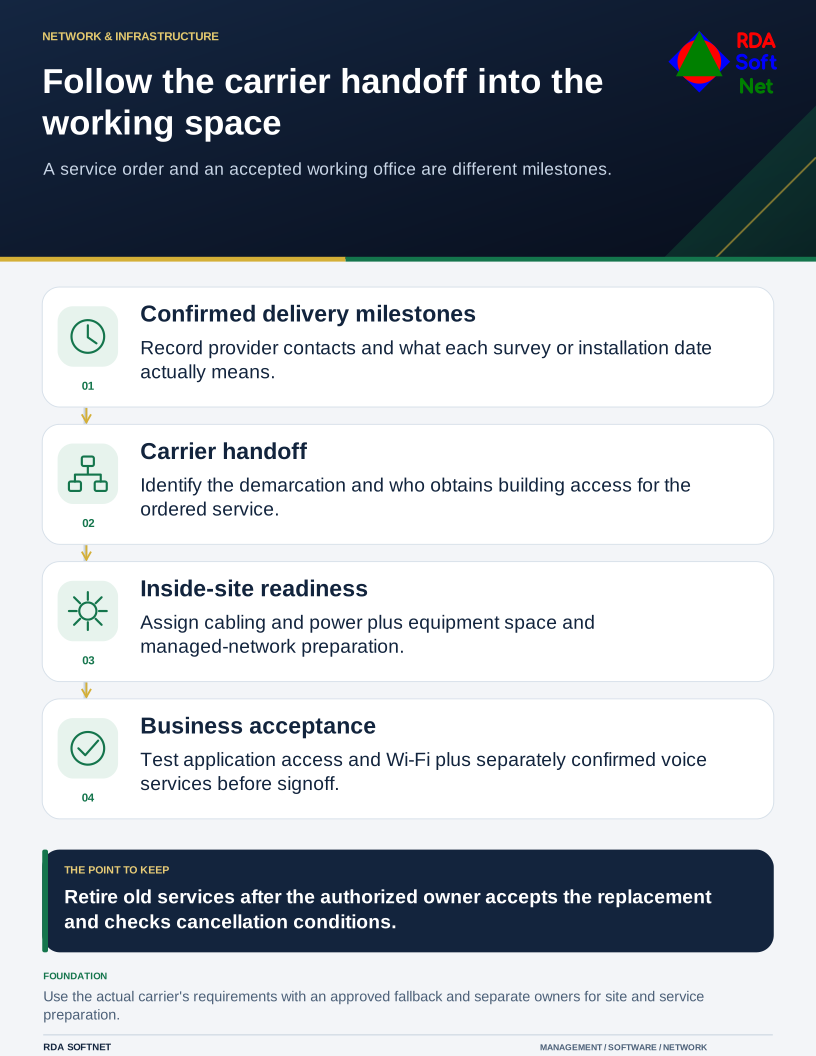
Keep one readiness record with the service address, suite, order reference, site contact, provider contact, agreed delivery milestones, and unresolved conditions. Confirm what each date means. A survey date, construction estimate, installation appointment, and accepted working service are different points in the schedule.
Follow the connection into the working space
Identify where the carrier's service ends and the organization's responsibility begins. The provider's handoff may be in a common telecommunications room rather than beside the office equipment. Establish who supplies and maintains the connection from that handoff to the intended equipment location.
AT&T's site preparation guide illustrates the responsibilities involved: site contacts, building access, the demarcation location, inside wiring, space, and power. Use the actual carrier's requirements for the ordered service. A different provider or building may divide the work differently.
Coordinate the landlord, facilities staff, carrier, cabling provider, and network administrator. Resolve access permissions, safe working arrangements, equipment space, electrical work, and any building restrictions with the responsible people. Set completion checks and contacts for dependencies that another provider must finish first.
Test the service staff will use
Agree acceptance with the application owners before the installation visit. Check the provider handoff and the managed network, then test representative business work. Include remote access, name resolution, required cloud applications, and any approved inbound services. Record necessary addressing or firewall changes through the change-approval process.
For Wi-Fi, check working areas and realistic device use using the wireless planning guide. Verify the intended network separation after configuration. A successful connection from one laptop does not establish that the office's required services are ready.
Voice services need their own provider confirmation, call-flow tests, and any required emergency-calling review for the actual location. Do not assume the internet order also schedules a telephone-number transfer or completes the voice provider's responsibilities.
Keep a fallback until the handover is accepted
Have management decide what work can proceed if delivery slips or a required application fails acceptance. Confirm that the proposed temporary connection supports the approved work and security requirements. The continuity plan should identify the fallback, activation authority, limitations, and support route.
Retire old services only after the authorized owner accepts the replacement and checks cancellation conditions. Leave staff and support with the tested arrangement, provider escalation contacts, and a record of remaining actions. The useful finish is an office that can perform its work, with clear responsibility for the connection underneath it.