
A growing cloud invoice is a reason to investigate, not proof that someone has wasted money. More storage may reflect a records obligation. A quiet server may run the overnight job that produces tomorrow's work. A sensible cost review connects charges to their purpose before anyone starts removing resources.
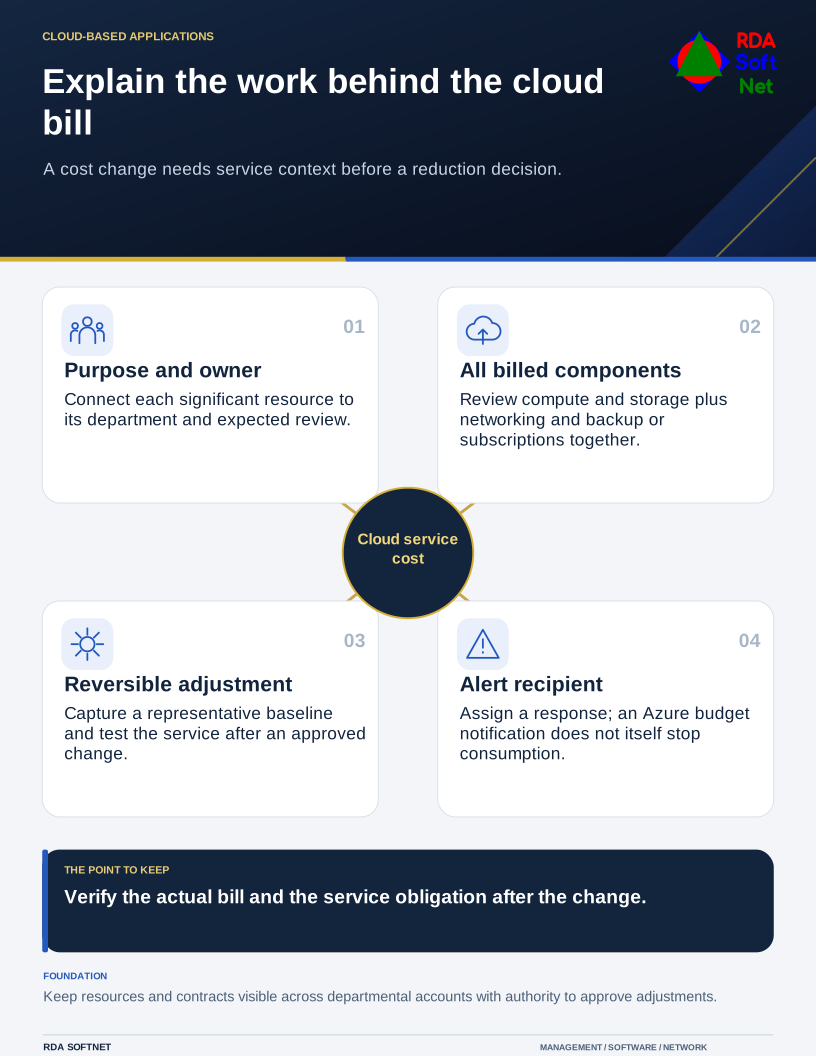
Explain the work behind the cloud bill
A cost change needs service context before a reduction decision.
Begin with a billing period the finance and technical teams can both explain. Compare it with the previous period and note projects, additional users, migrations, or changes in demand. The useful question is which differences were expected and who can account for the others.
Name the work behind the resource
For each significant service, record its business owner, technical contact, purpose, environment, and expected review date. Use consistent tags or an equivalent inventory when the platform permits it. Include resources purchased through separate accounts or departments; a central dashboard cannot explain an invoice it never receives.
The cloud governance guide connects that inventory with tenant ownership and licensing. An owner is more useful than a label alone. Someone needs authority to say that a test environment has finished its job, or that a retained data set must remain available.
Look at computing, storage, networking, backup, and subscriptions together. Deleting a virtual machine may leave separately billed components. Moving older files to another storage tier may reduce one charge while adding retrieval costs or delay when someone needs those records.
Make reductions reversible where possible
Review usage over a period that includes the workload's busy times. Low average processor use alone does not establish that a server is oversized. Memory demand, scheduled processing, application requirements, and recovery expectations can change the conclusion.
For an approved change, capture the baseline, make a controlled adjustment, and verify both the bill and the service afterward. The planning and change guide helps turn a suggested saving into a reviewable decision. State who will check the outcome and what would trigger a reversal.
Scheduling a development environment to stop outside working hours can be useful. Confirm dependencies and restart requirements first. Automated deletion deserves more caution, especially where retention, backups, or another system may depend on the resource.
Alerts need a recipient and a response
Microsoft explains that Azure budgets notify about spending; they do not stop consumption. Assign someone to review each alert. Decide which changes need immediate investigation and which belong in the next service review.
If alerts will trigger actions, Microsoft's cost automation guidance describes that additional configuration. Apply the same testing and approval discipline used for other automated workflows.
A cost review should end with a short decision record: retain, adjust, retire, or investigate. Include the expected saving and the service obligation it must preserve. That gives management a useful operating picture and prevents the same unexplained charges from returning at the next renewal.