
An unused-looking cloud resource may be forgotten waste. It may also be a standby system, a monthly reporting service, or the only recoverable copy of a dataset. A low utilization number does not tell you which one it is.
Put a human decision before cloud removal
Low activity can describe waste or a service somebody still needs.
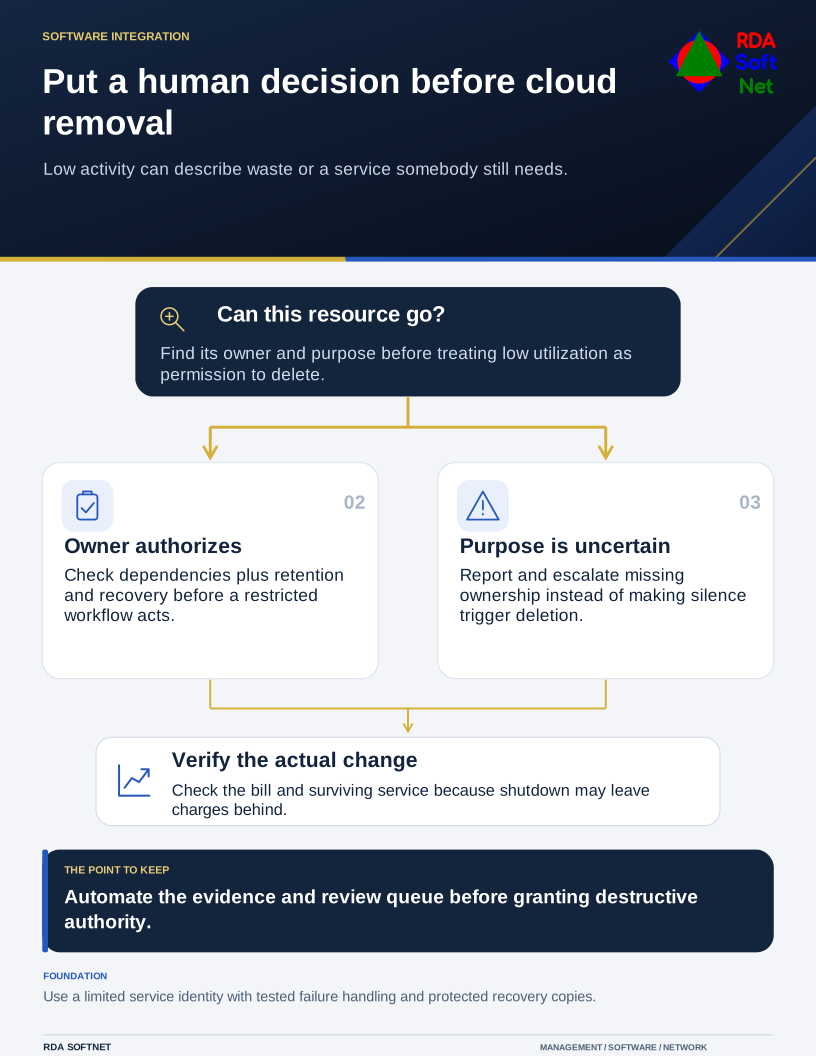
Automation can make a cloud review easier by collecting the evidence and directing it to the right person. Begin there. Let the organization learn how accurately it can identify ownership and purpose before granting a workflow permission to stop or delete systems.
Build a review queue
Inventory the resources and assign a service owner, purpose, environment, and expected review date. Use a consistent tagging or documentation approach, with a process for missing information. A tag is useful evidence, but it should not become unquestioned authority for a destructive action.
A scheduled flow could report resources without an owner, list unattached disks for investigation, or notify a sponsor that a temporary environment has reached its review date. Power Automate may help coordinate those notifications and approvals; the technical execution should use supported platform tools and a suitably restricted identity.
Record the proposed action, approver, affected resources, and conditions that must be satisfied. The automation guide covers testing, permissions, failure handling, and rollback. Start with a report that a human can inspect, and compare it with the actual environment.
Know which action changes the bill
Stopping a guest operating system is not necessarily the same as releasing its cloud allocation. Microsoft's Azure VM billing guidance distinguishes stopped and deallocated states; associated storage and other resources can continue to incur costs.
For each proposed change, check the exact billing effect and the operational dependency. A development server may need an overnight job, and a resource outside working hours may serve users in another time zone. Agree on exceptions with the owner instead of selecting a universal CPU threshold.
Use cloud governance to keep service ownership, subscription scope, and costs connected. Savings should be measured from the bill and contract, including any continuing charges, rather than inferred from a successful shutdown message.
Make removal a controlled decision
Before deleting storage or a temporary environment, check retention requirements, holds, recovery needs, and dependencies. Confirm that a required backup is protected and can be restored. A snapshot that exists in the same arrangement being removed may not provide the protection the team expects.
The backup and recovery guide helps define that check. Establish what happens if the owner does not respond: escalation is a valid outcome, while automatic deletion may be inappropriate for the information involved.
When a limited automation is approved, test it against known cases and review the first live results. Alert a named person when it fails or acts outside the expected pattern. Keep the authority narrow and the action traceable. A small, dependable workflow that closes review actions is more useful than a broad cleanup rule that nobody feels safe leaving enabled.