
An application connection may continue reading information after its browser tab is closed. The review needs to examine the access granted to the connection, not just whether the application appears useful.
A connection can outlast the tab
Review the authority granted to an application through its whole relationship.
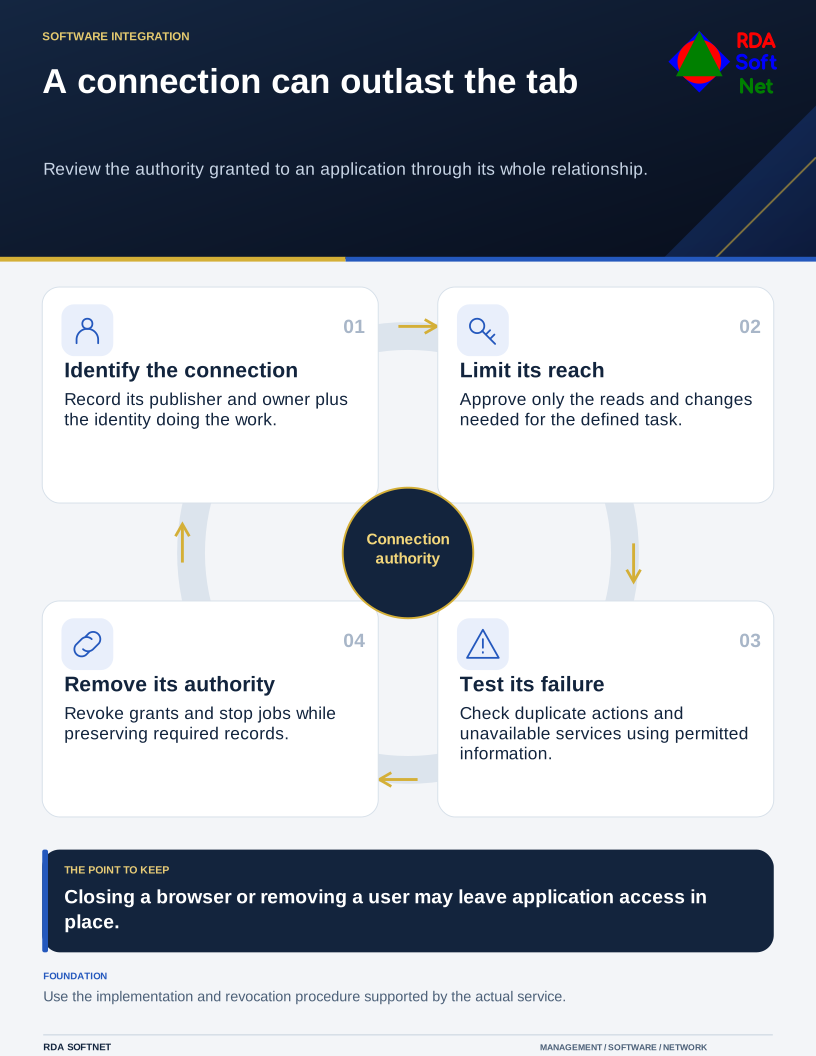
Ask what the integration reads, changes, exports, and deletes. Identify its publisher, business owner, authentication method, permissions, and stored credentials. Distinguish access exercised as a signed-in user from access an application can exercise independently. Check the vendor’s documentation for the actual implementation.
Approve the smallest useful connection
Match permissions to a defined task. Broad tenant-wide access deserves scrutiny even when the application is well known. Microsoft documents app consent policies for controlling which applications and permissions users may approve in Entra ID. Those controls support review; publisher verification alone does not establish that a connection is appropriate.
Test with representative, approved information and a limited audience. Confirm what happens when the connection fails, duplicates a transaction, or loses access. A flow that changes an important record should have an accountable approver and a way to identify affected records if a correction is needed.
Record how it ends
Document how to revoke grants or credentials, stop jobs, preserve required records, and confirm the provider’s retained copies. Removing an employee or uninstalling an extension may not remove every authorization. Plan changes with the application owner so disconnection does not silently interrupt an operational dependency.
The resulting record belongs with vendor review, data handling, and controlled automation. Have the application owner and the providers operating each side of the connection check it together. The next access review can then start with a known purpose, approved permissions, and a named contact.