
A privacy policy copied from another organization can describe obligations that do not apply while overlooking ones that do. Start by understanding the information and the work, then have the appropriate legal or compliance authority determine the requirements.
From information facts to assigned obligations
Determine scope before turning a copied policy into operating instructions.
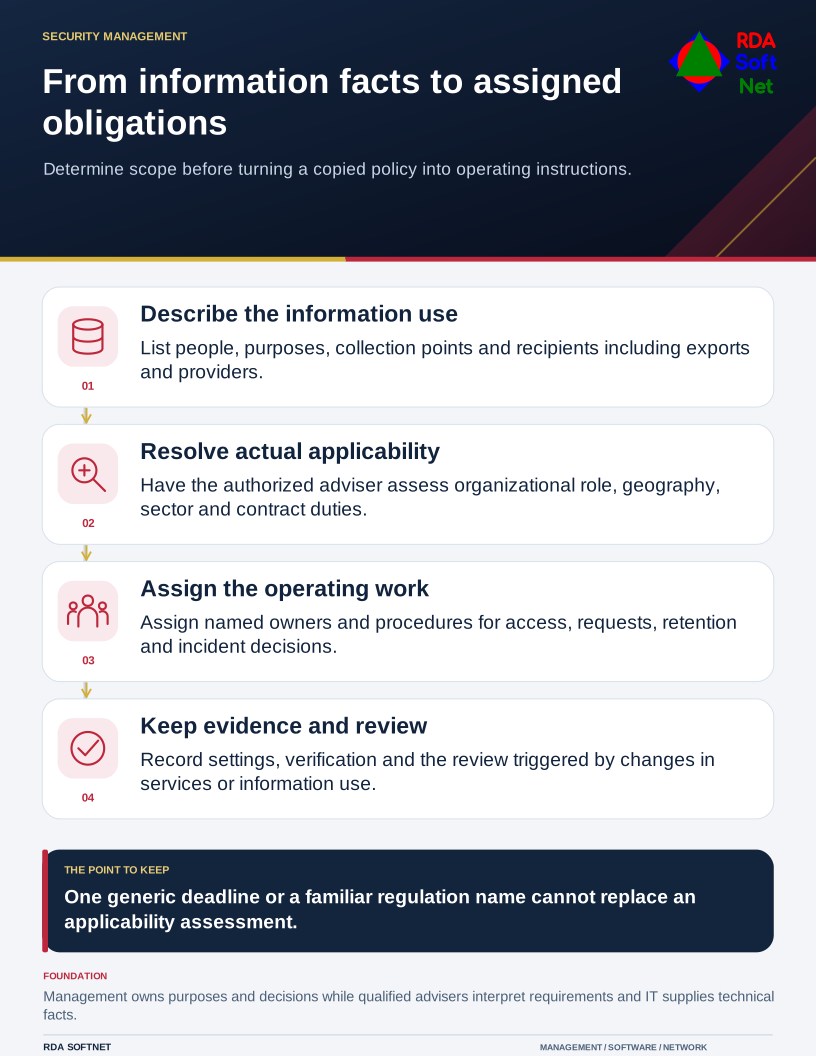
IT contributes evidence about collection, storage, access, sharing, and disposal. Management owns the business purpose and authorized decisions. Providers need clear responsibilities. None of those roles is replaced by a statement on the website.
Establish scope from facts
List the categories of information, people concerned, collection points, purposes, and organizations receiving it. Include employee records, website forms, exported spreadsheets, hosted applications, and copies used by service providers. The main database is rarely the whole picture.
Location and relationships matter, but broad slogans can mislead. The European Commission's GDPR application guidance explains scope through EU establishment and certain activities involving people in the EU. It is not simply a rule covering every EU citizen's information anywhere in the world.
California's Attorney General describes the CCPA's business scope using business characteristics and specified thresholds, with exceptions. Avoid assuming that every organization holding a California address has the same obligations. Review the current rules and the organization's role before deciding applicability.
Sector, state, contract, and public-sector requirements need their own assessment. The HIPAA, CJIS, and Massachusetts information-security guides provide supporting context where relevant. One applicable requirement does not automatically displace all others, and a product's compliance marketing does not settle the organization's responsibilities.
Turn the assessment into work people can perform
For each applicable obligation, record the decision, responsible owner, required process, system setting, and evidence. Link the assessment to the data governance process. Keep the approved purposes and authority for processing clear rather than collecting information simply because a form has room for it.
Review access by role and establish a supported route for requests about personal information. The person receiving a request needs to know where to send it, how identity will be checked appropriately, and who decides the response. The technical team should not improvise disclosure or deletion from an unverified email.
Set retention and disposal rules for categories of records, considering applicable obligations and holds. Include exports and provider arrangements. A deletion request and an ordinary retention schedule may require different handling, so an automatic purge should not make the decision on its own.
Prepare the incident handoff before a suspected disclosure. Preserve relevant evidence and involve the designated response and legal contacts promptly. Use the incident response guide to coordinate assessment; notification requirements can depend on the rule, facts, recipient, and triggering event. A single deadline pasted into every procedure is unreliable.
Revisit the assessment when the organization changes services, locations, information uses, or providers. Keep a review date and owner with each decision. The practical result is a set of assigned, verifiable activities that matches the organization as it operates.