
A privacy notice can be carefully written and still describe a process the organization no longer follows. A new web form, analytics service, recruitment platform, or AI assistant can change where information goes without anyone updating the notice.
Keep the notice and the service aligned
A changed information journey can make an accurate-looking notice stale.
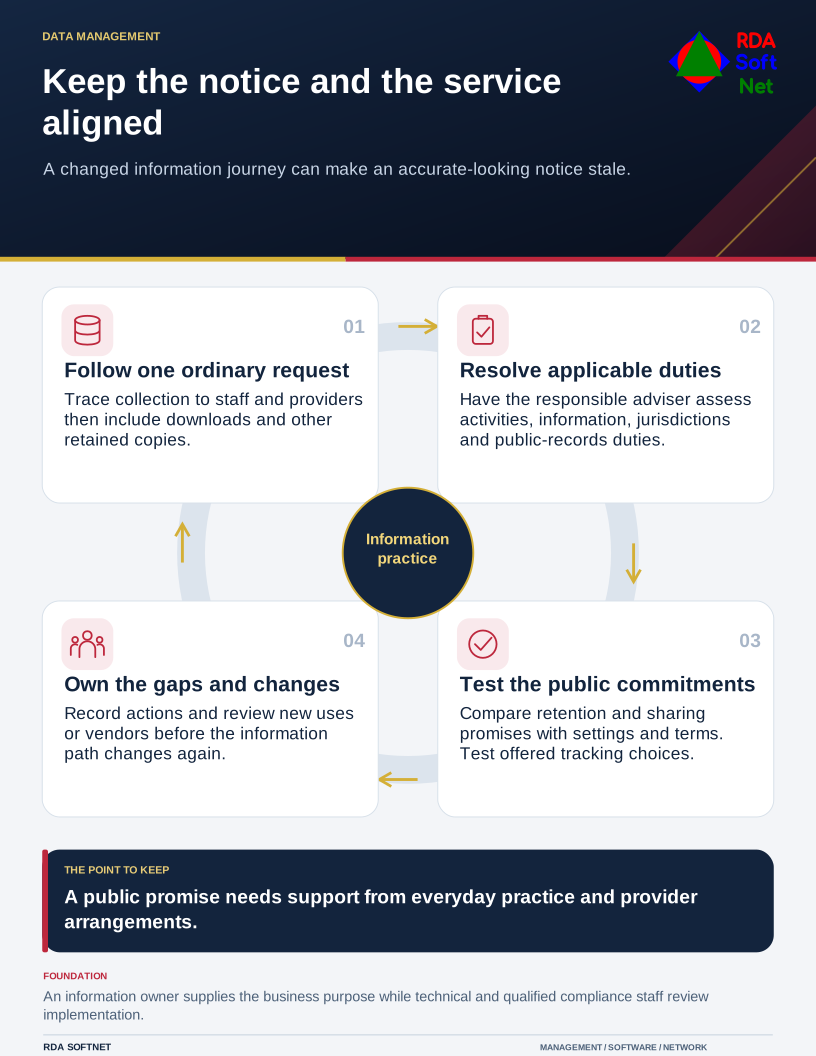
The useful starting point is a walk through the work. Follow one ordinary request from the website to the staff member who handles it, through any outside services, and into the records the organization keeps. Then compare that journey with what people have been told.
Find the information before changing the policy
List the collection points: online forms, mailing lists, telephone notes, payment systems, personnel processes, and files sent to service providers. Identify the information requested, the reason for collecting it, and who can access it. Remember spreadsheets and downloaded exports, which often outlive the application that produced them.
The FTC's guide to protecting personal information emphasizes understanding information flows and limiting what is kept. That is a useful operational foundation before applying the legal requirements relevant to the organization.
Our data governance guide connects this inventory with ownership, retention, and disposal. Assign an information owner who understands the business purpose. IT can explain storage and permissions, but it should not independently decide how long a department is legally required to retain a record.
Establish which requirements apply
Privacy obligations depend on the organization, its activities, the people affected, the information involved, and the jurisdictions. There is no universal rule that every website needs the same consent banner or that every business must appoint the same formal role.
Have the responsible legal or compliance adviser identify applicable duties. Consider sector requirements, contracts, state privacy and security laws, and public records obligations where relevant. Check current requirements when the process changes; a calendar-year checklist can become stale.
Translate the findings into practical tasks. Who receives a request to access or correct information? How is identity checked without collecting unnecessary additional information? Who assesses an incident, and how do they reach the relevant adviser quickly? The incident response guide covers that handoff without assuming one notification deadline fits every event.
Test the promises
Compare the notice with actual settings and contracts. If it says information is removed after a period, determine whether that includes exports, connected services, and the provider's retention arrangements. If tracking can be declined, test the site's behavior after declining it.
Review new vendors before sending them personal information. The vendor review guide covers responsibility, evidence, incident contacts, and exit arrangements. A provider's standard terms may not match the organization's public promise.
Keep a short record of the review, decisions, gaps, and assigned actions. Give staff a clear place to ask questions when a new use arises. Privacy management becomes more dependable when the notice, technology, contracts, and everyday practice are reviewed together. The document should explain the work people actually do, and the work should support the commitments the document makes.