
A shared record can bring several organizations into the same process without giving them the same interests or authority. Before they rely on it, they need an agreement about who may contribute, who accepts a record, and how disagreements are settled. The software cannot decide those business questions for them.
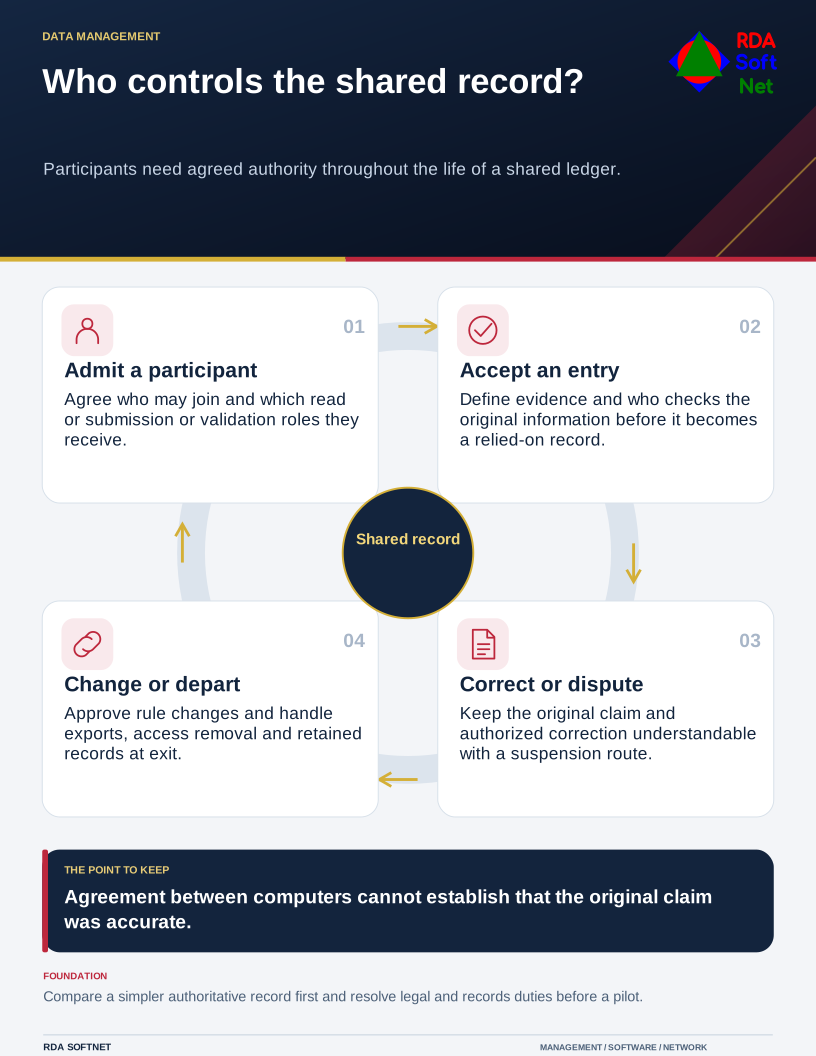
Who controls the shared record?
Participants need agreed authority throughout the life of a shared ledger.
Start with the reason for sharing. Describe the event being recorded, the parties relying on it, and the decision it supports. If one organization can maintain the authoritative record and provide appropriate access, compare that simpler arrangement before choosing a distributed ledger. The technology planning process makes that comparison reviewable.
Name the participants and their authority
Identify the organization or group responsible for the service. Establish who can admit or remove a participant and what checks happen before access is granted. A participant's permission to read records, submit information, validate entries, or administer the platform should be a deliberate assignment.
NIST's blockchain overview explains that permissioned networks have governance through an owner or consortium. Shared operation does not mean the absence of control. Document how representatives make decisions and what happens if a participant becomes unavailable or stops meeting the agreement.
Keep organizational participation separate from an individual's login. Staff changes need to reach the shared service, and administrative or signing identities need controlled custody. The credential lifecycle and encryption guide cover those supporting responsibilities.
Agree how an error becomes a correction
Define the evidence needed before an entry is accepted. Identify who checks the information supplied by an employee, sensor, or connected application. Agreement among computers does not establish that the original claim was accurate.
Test the correction process with a harmless example. Decide how the original assertion, disputed status, and authorized correction will remain understandable to the parties. Include a route for urgent suspension when a credential is compromised or a participant submits unreliable information. Set the authority for restoring normal operation afterward.
Review retention, disclosure, and any required correction or removal with the responsible records and legal advisers. Avoid placing sensitive records into a design whose handling obligations have not been resolved. Connect the decision to data governance and the authorized retention rules.
Plan changes and departure before the pilot ends
Agree how software changes, validation-rule changes, costs, and new information uses are proposed and approved. Explain what a dissenting participant can do and how a dispute is escalated. Keep a current record of the decision and the affected interfaces.
An exit procedure should cover access removal, retained records, usable exports, key handling, and work still in progress. Have a second participant follow the admission, correction, and departure procedures during a bounded trial. Resolve any step that depends on an informal promise before the shared record becomes an operating dependency.