
An application-discovery report can name a service without explaining why anyone uses it. An invoice can show a subscription without identifying its administrator. A department conversation can reveal work that neither record captures. A useful inventory brings those views together under an agreed scope.
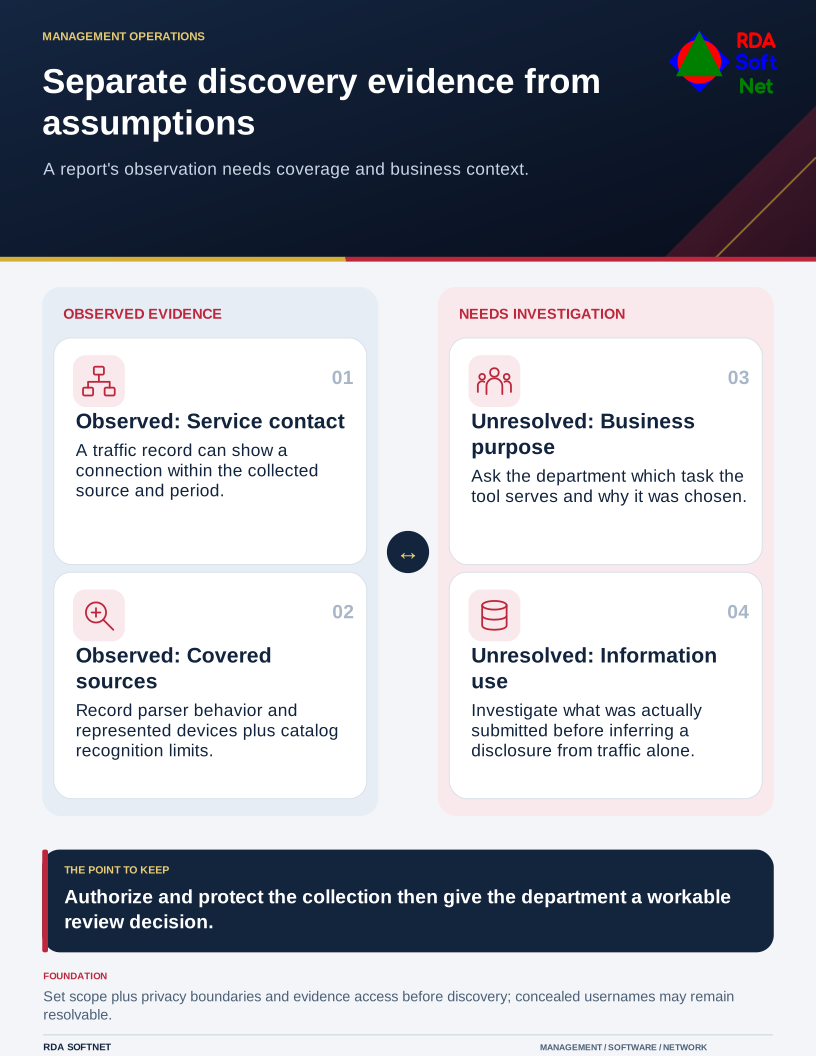
Separate discovery evidence from assumptions
A report's observation needs coverage and business context.
Start by stating the decision the review will support. Perhaps the organization needs to find unowned subscriptions, identify applications handling sensitive records, or prepare a renewal review. Collect information suited to that purpose rather than everything a tool can display.
Authorize the collection and its audience
Identify who approves the review and who operates it. Record the departments, managed devices, services, time period, and information sources included. Purchasing records, identity-provider applications, device inventories, and authorized traffic reports answer different questions.
Agree what remains outside scope, especially personal accounts and privately owned equipment. Involve the responsible management, privacy, HR, or legal roles where the proposed collection raises those questions. Explain the purpose and approved arrangements to staff through the appropriate organizational process.
Apply the information-handling rules to the discovery records themselves. Account names, destinations, and usage patterns can reveal sensitive work. Define who may inspect raw records, what can be included in a departmental summary, and how long the evidence will be retained.
Check features described as anonymization. Microsoft's discovery privacy guidance includes arrangements in which specially authorized administrators can resolve concealed usernames, with an audited action. Such a feature should not be described to employees as making identification impossible.
Record what the evidence can show
Test a representative, authorized source before broad collection. Confirm the period, relevant fields, parser behavior, and devices or network paths represented. A traffic entry may support a finding that a service was contacted; it does not necessarily explain which business action occurred or whether confidential records were submitted.
Microsoft's cloud discovery overview describes analysis of supplied traffic logs and catalog-dependent recognition. Product support and the collected sources affect visibility. A missing application is a question to investigate, rather than proof that nobody uses it.
Keep the source, date, coverage, and uncertainty with the finding. Separate an observed event from a staff explanation and from an inference that still needs checking. Use the actual subscription and administrative permissions when deciding which reports the organization can obtain.
Return findings to the people doing the work
Ask the department to explain the task, information, owner, and current workaround. A previously unreviewed tool may be filling a real service gap. Establish a supported alternative before blocking a dependency without understanding its effect.
The application register review follows that conversation through ownership and renewal. Use integration review for connected permissions and cloud governance for administration, licensing, and provider responsibilities.
Finish with assigned decisions: approve under stated conditions, investigate, replace, or retire through a planned handover. Restrict and dispose of discovery material under the agreed rules. The maintained service register should outlast the temporary exercise, without becoming an unexplained history of individual employees' activity.