
A vendor relationship can be small on the purchasing ledger and important in the IT environment. A specialist application may hold critical records. A support provider may have remote administrative access. A low-cost add-on may connect to a much larger information system.
Review the supplier by its operational reach
Contract value alone cannot describe the dependency.
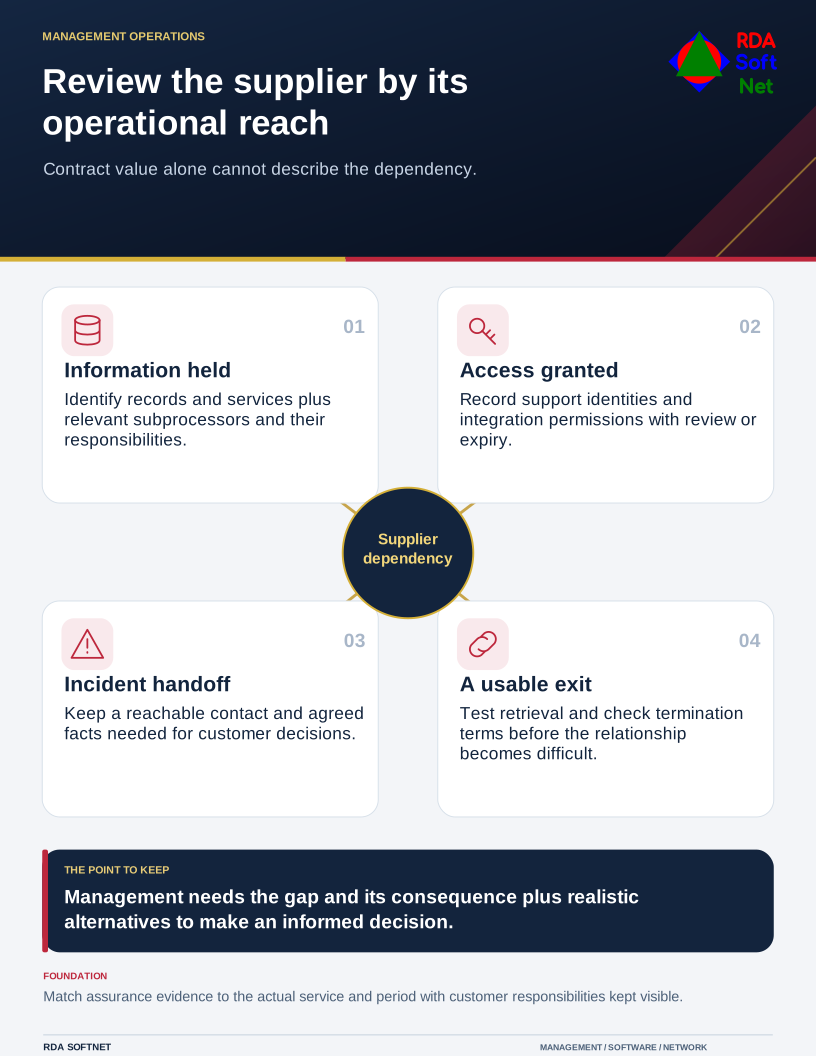
Review the relationship according to what it can affect. The price of the contract and the size of the vendor are useful background, but neither tells you how much access has been granted or what happens if the service becomes unavailable.
Start with the actual dependency
List what the supplier stores, which systems it connects to, and who uses the service. Include support accounts, application permissions, file exchanges, and subcontractors where relevant. Ask the business owner how long the department could operate without it and what an acceptable fallback would be.
This is the basis of the vendor review. A company supplying publicly available information needs a different assessment from one maintaining a financial application. A long generic questionnaire can distract from the few questions that determine whether a particular arrangement is workable.
NIST's supply chain risk management guidance treats supplier risk as part of organizational risk management throughout acquisition and operation. That is a useful reason to revisit the relationship after signing, especially when permissions or services change.
Ask for evidence that fits the service
Discuss authentication, staff access, security updates, backup, incident reporting, and data handling. If the supplier offers an assurance report or certification, check its scope and period. It may cover a different service or leave customer configuration responsibilities outside the assessment.
Agree who creates and removes vendor access. Prefer identifiable accounts with limited permissions and additional authentication where available. Record approved support pathways and expiry or review arrangements. The application integration guide addresses connections that can continue operating without someone actively signing in.
A vendor's refusal or inability to meet a request deserves examination, but it does not automatically answer the purchasing question. Management needs the facts: the unmet requirement, its consequence, available alternatives, and any proposed compensating arrangement. Document the authorized decision rather than treating silence as acceptance.
Prepare for a difficult phone call
Maintain an incident contact and a way to reach the supplier outside the affected system. Agree how you will establish which customers, information, and services are involved. Notification terms should fit applicable law, contracts, and operating needs; one generic deadline will not suit every relationship.
Connect those contacts to the organization's incident response arrangements. If service must be suspended, someone needs authority to approve that interruption and communicate with the affected department.
Finally, test whether useful information can be exported and what ending the agreement requires. The cloud exit guide helps make that part of procurement rather than a surprise at renewal. A supplier review is successful when both parties understand their responsibilities and the organization can make a reasoned decision about the dependency it is accepting.