
A hosted application's trial can become a department's working system before purchasing or IT knows it exists. Staff invite colleagues, upload live records, connect a mailbox, and then discover that nobody agreed who owns the service or how to leave it.
Decide what the SaaS trial is allowed to become
A trial needs an explicit boundary before live records or connected systems enter it.
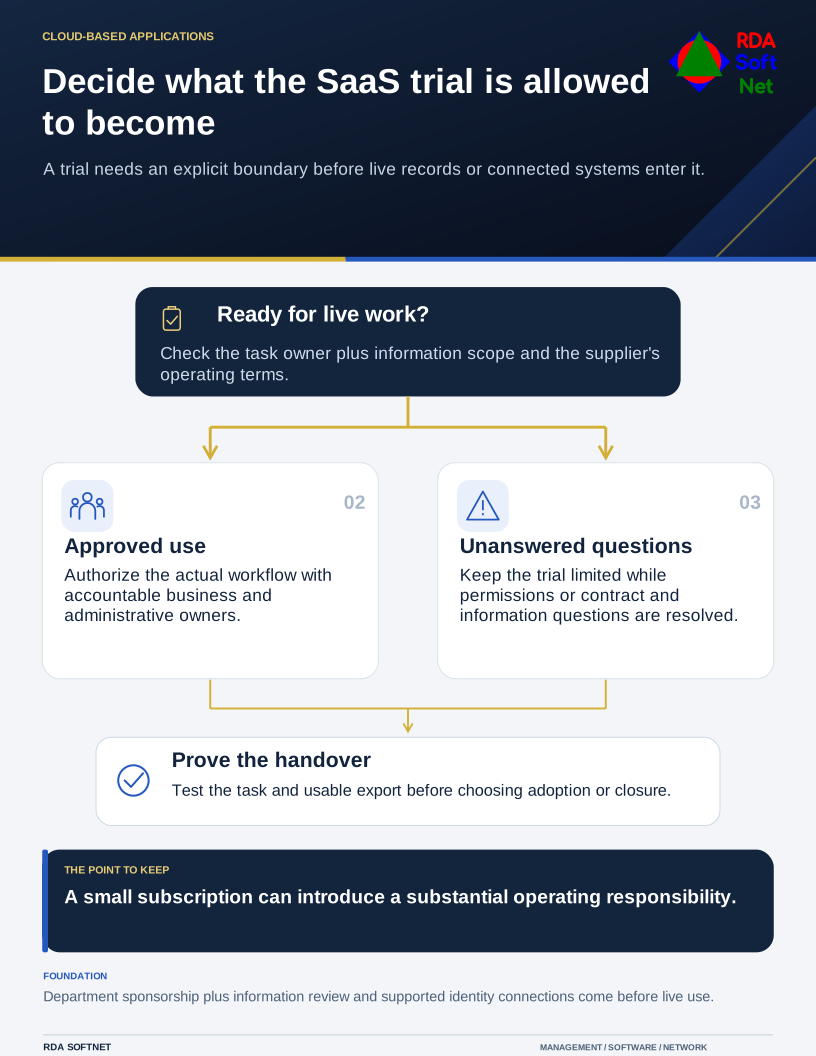
A useful review need not block every experiment. It should distinguish an isolated trial with test information from a service that can affect organizational records and daily operations. The approval should match the actual use, not merely the small price on the first invoice.
Ask for a working demonstration
Have the department describe the problem and show the current process. Then ask the supplier to demonstrate the proposed workflow, including access changes, errors, reporting, and export. Features are easier to assess when tied to an ordinary task.
Record the required result, implementation work, recurring charges, support responsibilities, and review date. Include the effort needed to migrate existing information and train the people who will use it. Our planning and procurement guide helps turn that assessment into an understandable authorization.
Name a departmental owner and an administrative owner. They may be different people, and both need to know who handles incidents, billing, renewals, and access requests.
Review the connections and the information
List the information the service will receive and the other systems it will touch. Check whether sign-in can use the organizational identity provider and how permissions are approved. Microsoft's consent overview explains how application access can be authorized by users or administrators in its environment.
The application integration guide covers the technical connection, including permissions and identities. A vendor review addresses a different question: whether the organization understands and accepts the supplier relationship. Do both when a service brings both kinds of change.
Ask for relevant security evidence and read its scope. Clarify the services, locations, time period, exceptions, and customer responsibilities it actually covers. Avoid treating a certification logo as a substitute for understanding how the proposed service operates.
Use vendor review to record incident contacts, contractual responsibilities, subcontractors, and unresolved questions. Have the responsible adviser review applicable privacy and regulatory terms before live information is introduced.
Test how the relationship ends
Ask for a test export and inspect it. Can staff open the files, understand the fields, and retain attachments or history they need? Determine the notice period, access window, transition assistance, deletion arrangements, and any continuing retention obligations.
Our cloud exit guide covers the handover and removal process. Include the integration permissions and scheduled work that must be disconnected as well as the subscription itself.
At the end of a trial, make an explicit decision to adopt, extend, or close it. Close unsuccessful trials properly and remove their access. For adopted services, retain the decision, operating instructions, and review date. A small application should still have a clear home in the organization, with someone able to explain why it is there and what it depends on.