
A technology plan can look impressive and still be impossible to carry out. The same administrator cannot replace a server, support daily operations, train staff on a new application, and move an office in the same week. A useful roadmap makes those conflicts visible before they become emergencies.
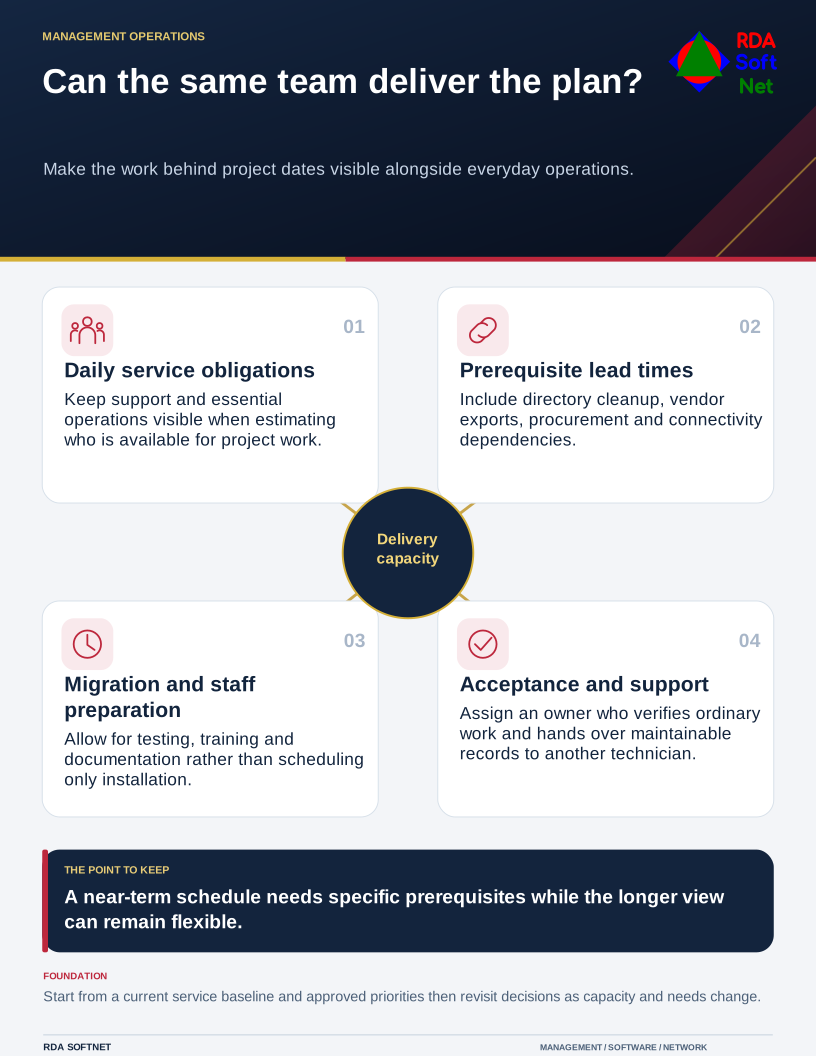
Can the same team deliver the plan?
Make the work behind project dates visible alongside everyday operations.
Start with the work the organization needs to deliver. Ask department leaders where delays occur, what cannot tolerate an interruption, and what is changing. A new program, building, staffing pattern, or reporting requirement may matter more than an aging device that still performs its job.
Put a baseline under the plan
Inventory the services that support those activities, including cloud subscriptions, identity systems, network connections, critical applications, and outside providers. Record an owner and a support status. Hardware age matters, but so do expiring contracts, undocumented integrations, and a process only one person understands.
The NIST small business quick-start guide offers a proportionate way for smaller organizations to begin managing cybersecurity risk. Use that kind of structured review to inform priorities, alongside operational needs and the organization's obligations.
An assessment should produce decisions. If the recommendation is to replace an application, explain the service problem, the options considered, and what improvement staff should see. Our planning and procurement guidance describes the approval and handoff behind that decision.
Show what has to happen first
A project date without its prerequisites can be misleading. A new application may require a directory cleanup, supported workstations, a vendor export, or a different internet service. Training may need to happen before a busy season. Procurement lead times may be longer than installation.
For each initiative, identify the sponsor, person coordinating the work, approving authority, estimated operating cost, and acceptance check. Include migration, testing, documentation, and staff time in the estimate. A product price is only part of the expense.
Keep the near-term schedule specific and the longer view flexible. It is reasonable to reserve funding for a replacement before selecting a model. It is less useful to promise a detailed deployment date while the requirements remain uncertain. Asset lifecycle planning connects replacement decisions with support, reuse, and eventual disposal.
Review the choices, not just the dates
At a regular service review, compare the plan with current facts. Which risks were reduced? Which dependency is holding up work? Did a department's needs change? A delayed low-value project may be the correct decision if a more urgent service issue has emerged.
Record decisions and update the person responsible for each action. When a project is complete, verify that staff can perform the intended work and that another support person can find the documentation. Installation alone is not the finish line.
RDA can work with the internal computer department or help provide that function. In either arrangement, the roadmap should belong to the organization. Leaders need a clear view of what they are authorizing, and staff need a plan they can actually deliver.