
Malware is a broad term for malicious software. Ransomware is one form of it, associated with demands for payment and often disruption or encryption of information. They are not two mutually exclusive categories with completely separate defenses.
A ransom note shows only part of an incident
Ransomware is a form of malware; the investigation must follow the evidence beyond encrypted files.
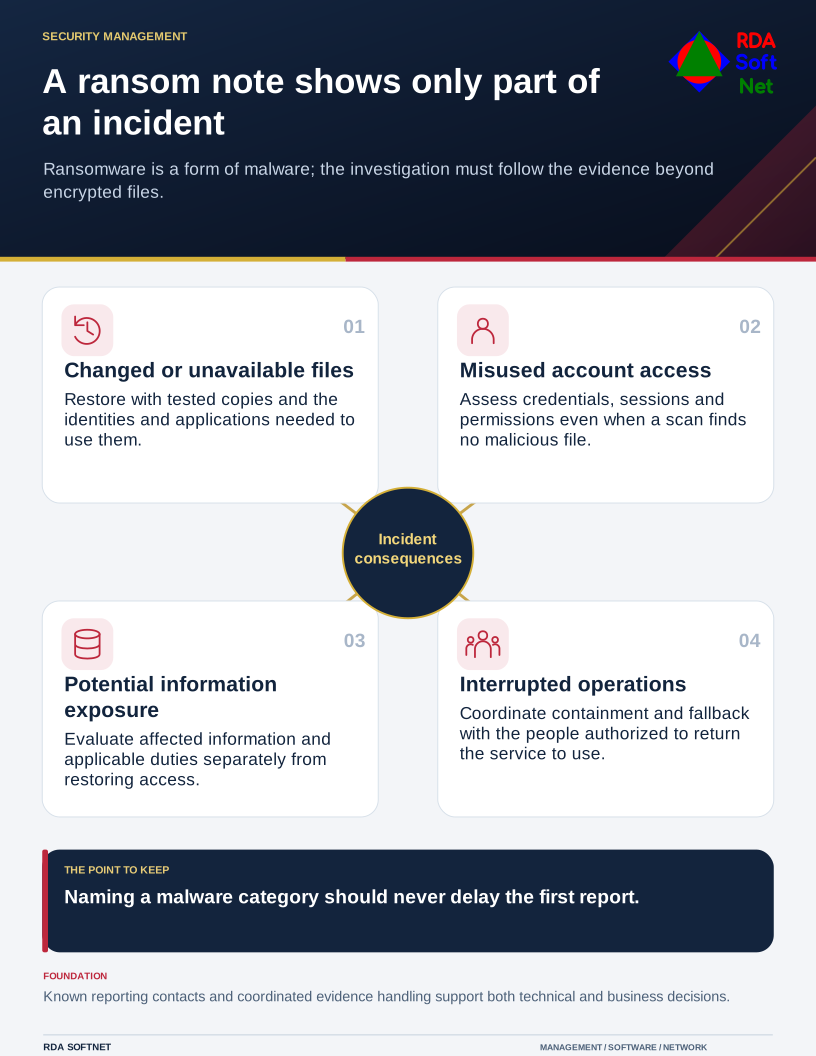
That distinction matters because a visible ransom note may arrive after other activity has already occurred. Information theft, stolen credentials, unauthorized access, and changes to systems can be part of the same incident. Restoring the encrypted files would address only one consequence.
Describe the behavior before choosing the label
A user may notice a security alert, an unexpected program, changed files, or a sign-in they did not perform. Those observations are enough to report. They do not need to decide whether the cause is a virus, trojan, spyware, ransomware, or an ordinary application failure.
NIST's malware handling guidance provides a foundation for preparation and coordinated response. Use current platform documentation for the specific tools and procedures involved. Familiar category names help discussion, but the response should follow the evidence and affected service.
Keep the incident reporting route simple. Report the time, device, message, and recent action through known contacts. Do not call an unsolicited support number or run cleanup software introduced by the suspicious message.
Use protections that work together
Maintain supported software, verified updates, managed endpoint protection, and controlled software installation. The endpoint security guide addresses the ongoing work behind those controls, including devices that are missing from management or repeatedly fail updates.
Limit unnecessary administrative authority and access to shared data. A compromised ordinary account can still affect information it is permitted to edit, so removing local administrator rights does not make files immune to harm. Account permissions and device permissions need separate review.
Use suitable authentication and a clear process for reviewing suspicious account activity. An intrusion can involve legitimate credentials or administrative tools as well as malicious files. A scanner finding no malware is therefore one piece of evidence, not a complete account of the event.
Recover the service and assess the information
Protect and test backup recovery before an incident. Include supporting identities, configuration, applications, and keys. A synchronized file copy may reproduce the unwanted change and should not be treated as the entire recovery design.
If ransomware is suspected, coordinate containment and preservation with the responsible response team. NIST's ransomware risk profile considers risk management through recovery. An operating plan should cover the department's fallback and the authority to return the service to use.
Evaluate possible disclosure separately through breach assessment and notification. Applicable duties depend on the information, facts, and organization; neither a malware label nor a successful restore settles them.
Keep the technical finding and the business impact connected in the incident record. Identify what access and information were affected and how the correction was verified. If the exact threat remains uncertain, say so and track the open investigation. Naming it can help when evidence supports the conclusion, but should never delay the first report.