
A file transfer can be encrypted and still deliver confidential information to the wrong person. Storage can be protected and still contain a public sharing link. Security depends on the information, recipient, permissions, and operating process together.
Four checks before sending a file
Protection depends on the recipient and the workflow as well as encryption.
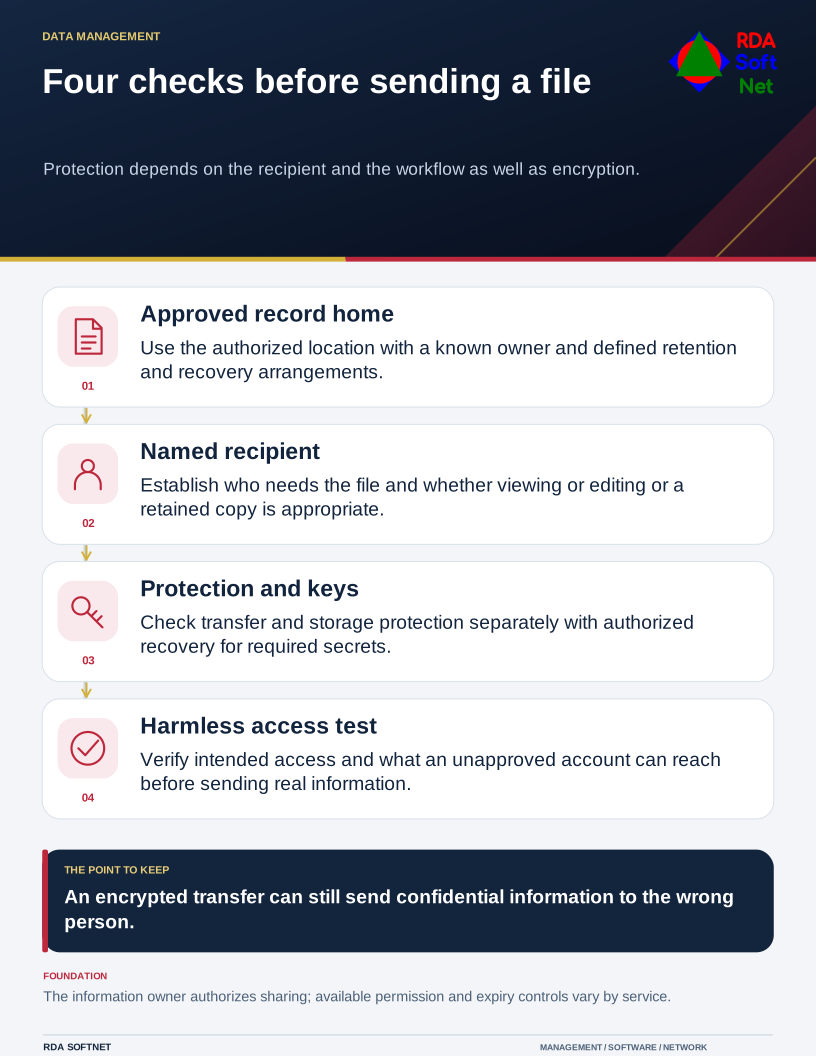
Before choosing a transfer method, establish what the file contains and why another person needs it. Decide whether they need to view, edit, download, or retain a copy. A supported sharing method should make that decision visible instead of leaving everyone to exchange whichever link is easiest.
Choose the home for the record
Use the approved storage arrangement for the information involved. It may be a departmental document library, an application, a managed file service, or a specifically authorized transfer platform. A personal cloud account should not become an informal substitute when a file is too large for email.
The file collaboration guide connects ownership, permissions, and departure handling. Confirm who can administer the location and how another authorized person takes over when the original owner is absent.
Check retention requirements and recovery arrangements separately. A synchronized folder may replicate an unwanted change or deletion. A current copy on several devices is not proof that a suitable earlier version can be restored.
Decide what encryption is protecting
Protecting information during transfer and protecting it while stored are related but different controls. End-to-end encryption makes a different claim about who can decrypt information. Do not treat the terms as interchangeable or assume a provider lacks access merely because it advertises encryption.
NIST's storage encryption guidance explains considerations around protecting stored information. Use the encryption guide to connect the chosen method with keys, recovery, and the actual workflow. Losing the only recovery key can make an otherwise intact file unusable.
Encryption also does not replace account protection or recipient authorization. An authenticated user or compromised authorized account may still read information through the normal application.
Test the access before sending real information
Prefer an approved named-recipient arrangement when the service supports it and the task calls for restricted access. Verify addresses through known details rather than relying only on autocomplete. Check editing, downloading, and expiry settings where available.
Send a harmless test file when the process is unfamiliar. Confirm what the recipient sees and what an unapproved account can reach. If a separate password or secret is used, communicate it through the agreed independent route and document recovery responsibilities.
The FTC's information protection guidance supports limiting access according to legitimate need. The data governance guide helps apply that decision to records and external sharing.
After the task, review temporary access and required copies. Include the backup and recovery process in the handover. Ask a second authorized person to locate the official copy and check the current recipient list. If that requires reconstructing the original sender's intentions, the sharing record needs more work before the procedure is reused.