
A notice saying your information was involved in a breach can leave the most important question unanswered: what should you do now? The answer depends on the information exposed. A leaked password, a payment card number, and a Social Security number create different follow-up tasks.
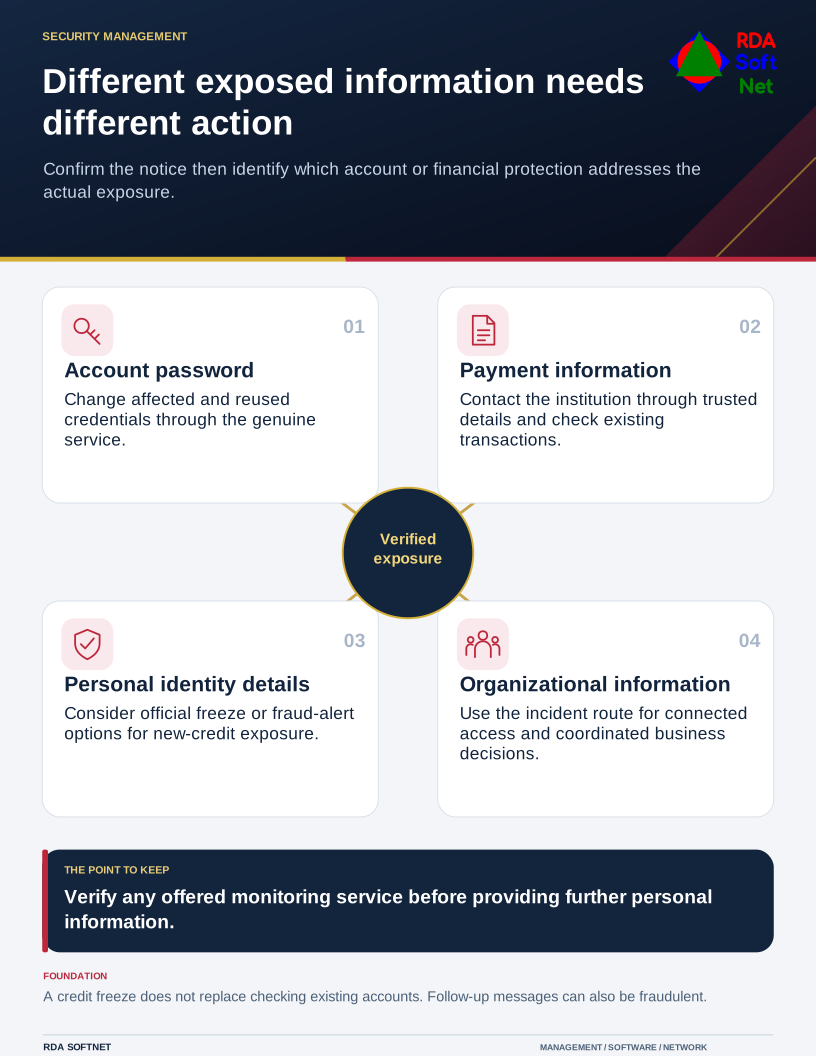
Different exposed information needs different action
Confirm the notice then identify which account or financial protection addresses the actual exposure.
Start by confirming the notice through a known route to the organization. Avoid entering information into a site reached only through an unexpected message. Keep the notice and any verified updates in a suitable location so you can follow what was reported and what you did.
Identify the exposure
Read which information was involved, the affected service, any dates provided, and the actions the organization recommends. Distinguish confirmed facts from information still being investigated. If the notice is unclear, use independently verified contact details to ask.
For work-related services or organizational accounts, report through the incident response route. The computer department may need to examine shared access, application connections, active sessions, or other users. Do not independently remove records or close a business service before that coordination occurs.
For a personal account password, use the genuine service to change it and address any reuse elsewhere. Review recovery details and available authentication protection. An approved password vault can help create and manage separate credentials, but the correct response still depends on what the service says was exposed.
Choose protection for the information involved
If payment details or suspicious transactions are involved, contact the financial institution using trusted details and follow its instructions. A credit monitoring product should not be assumed to detect every misuse of an existing payment account.
For personal identity exposure, consider the options explained by the FTC. Its credit freeze and fraud alert guidance distinguishes the controls and explains how to contact the credit bureaus. A freeze is directed at opening new credit; it is not a replacement for checking existing accounts and reporting unfamiliar activity.
If a notice offers monitoring or recovery help, verify the enrollment route, scope, duration, and terms before supplying further personal information. Keep a record of the service and how to obtain assistance. Our breach notice guide brings those decisions together without assuming every person needs the same action.
Expect follow-up messages to need checking too
An attacker can use the subject of a real breach to send convincing follow-up requests. Be careful with messages asking for a new fee, full identity information, credentials, or an authentication approval. Use the established contact route even when the message includes details from the genuine notice.
Review account statements and relevant records through the legitimate services. Report suspected identity theft through official recovery resources and the institutions involved, rather than paying an unfamiliar party who promises to remove all exposed information.
For an employer responding to affected staff, provide clear verified instructions and a contact for questions. Help people understand the options without collecting their personal account passwords or treating a generic checklist as an assessment of their individual circumstances.