
At the point a message is ready to leave the organization, somebody needs to be accountable for its contents. That decision should be visible before an employee or agency schedules a public post.
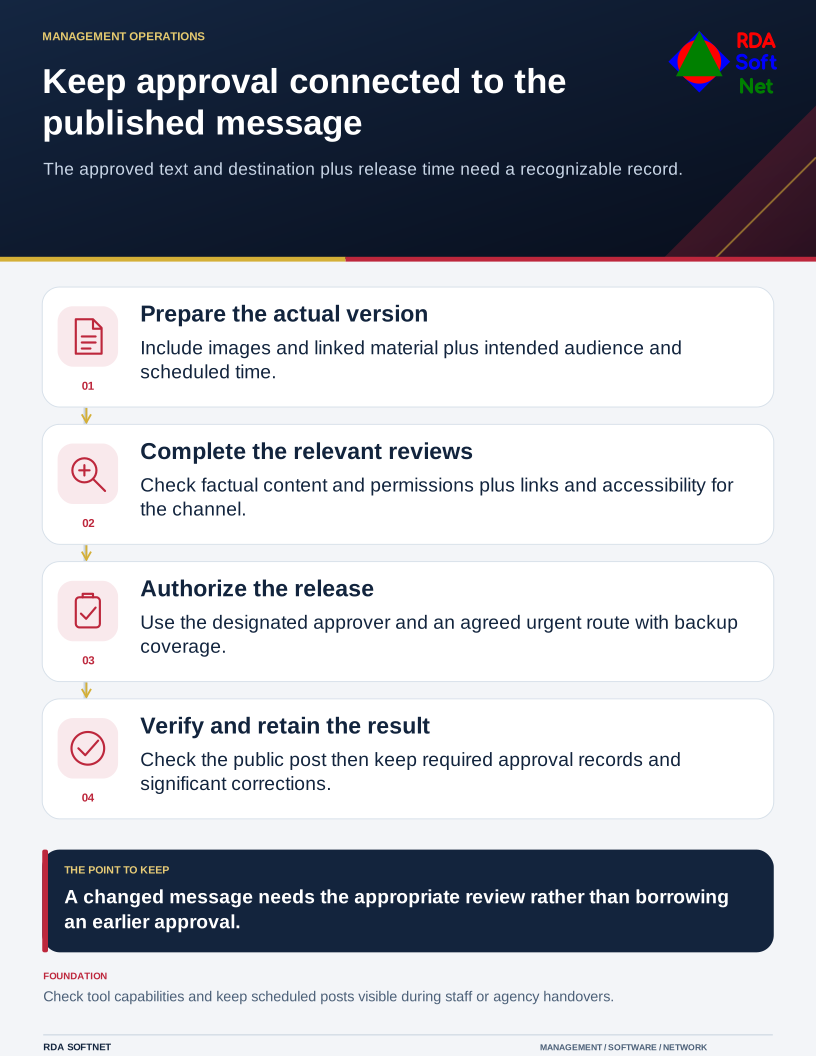
Keep approval connected to the published message
The approved text and destination plus release time need a recognizable record.
Start with the channel's purpose and organizational owner. Establish which routine messages staff may approve, which subjects need another reviewer, and who can decide when the normal owner is unavailable. Keep the arrangement proportionate enough to work during an ordinary busy day.
Make the approved version recognizable
Record who prepares the material, who checks it, who authorizes release, and who performs publication. One person may hold several roles in a small organization, but the responsibilities should still be clear. Higher-consequence material may need a subject expert or another designated authority.
Give the approver the actual text, image, destination, audience, and scheduled time. Include the linked page or attachment where it forms part of the message. Approval of an earlier version should not silently carry over to a changed date, contact detail, claim, or recipient.
The NCSC's social media publishing guidance recommends a workflow for creation, review, authorization, and publication. Check the selected platform's capabilities before relying on an approval feature. Where the tool cannot enforce the arrangement, establish a documented process staff can follow and verify.
Include practical publishing checks. Confirm links, dates, contact details, image rights, and whether the material contains information approved for public release. Use the accessibility process for understandable text, captions, and appropriate image alternatives. A preview on the author's screen may differ from the eventual public presentation.
Decide the urgent route before it is needed
An outage, closure, or correction may require a prompt announcement. Name a backup approver, approved communication route, and the facts that must be confirmed. Prepare useful templates where appropriate, with current contacts and a person responsible for maintaining them.
Keep scheduled posts visible to the authorized team. When circumstances change, somebody needs to review the queue and decide what should pause, change, or proceed. Include agency-operated schedulers and connected publishing applications in that check.
If an unauthorized message appears, coordinate account containment and factual communication through the incident-response process. Preserve relevant evidence and assign the correction decision. Removing a post may be necessary, but it should not erase the organization's only record of what happened.
Include the queue in the staff handover
The social account ownership review identifies the people, recovery arrangements, and tools behind the channel. Keep publishing authority aligned with that record. Offboarding should remove obsolete roles and connections while transferring unpublished material, scheduled work, approvals, and the responsibility for unfinished messages.
Retain the approved material, decision, public destination, and significant corrections according to the records schedule. The required record will depend on the organization and purpose; a platform's current display is not an agreed retention arrangement.
Have a second authorized colleague carry a harmless test through preparation, approval, scheduling, verification, and cancellation. Resolve any step that relies on one person's memory. The handover is usable when the team can explain both who may publish and who approved the message that actually appeared.