
A notice that information has appeared in a criminal marketplace raises an understandable question: can someone remove it? A provider may help address particular locations or investigate the exposure. No provider can reliably prove that every recipient has destroyed every copy of information that has already been distributed.
Turn a verified alert into specific action
The exposed information and its remaining authority determine the response.
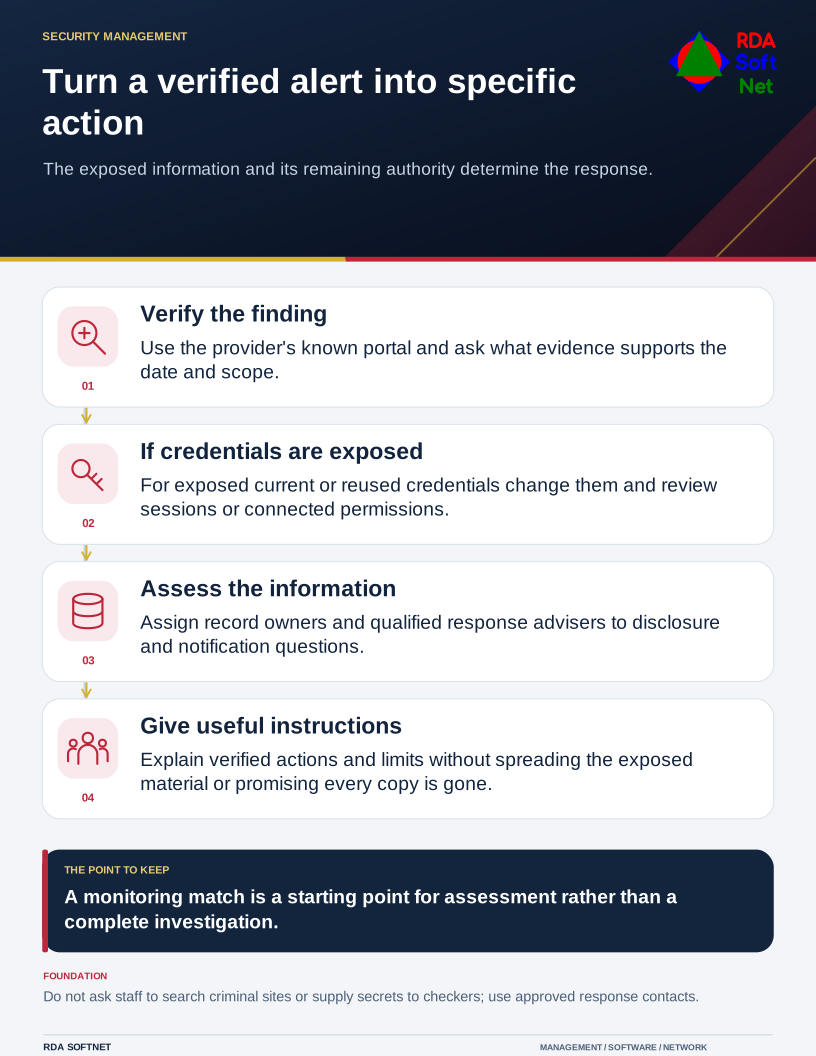
Focus first on what was exposed and what someone could do with it. An old email address, a current password, financial details, and confidential organizational records create different response needs. The phrase dark web is not enough to determine the scope or severity.
Verify the alert without creating another disclosure
Use known support contacts and the monitoring provider's established portal, rather than links in an unexpected warning. Ask what information supports the finding, its date, and whether the report identifies a source. A matching address alone does not prove a current account compromise.
Do not ask staff to search criminal sites, download exposed datasets, or send passwords to a checker. Preserve useful evidence through the approved incident response process. Limit the people receiving sensitive details to those responsible for the assessment.
The FTC's breach response guide emphasizes coordinated assessment and preservation of evidence. Apply it to the actual facts rather than treating a monitoring result as a complete investigation.
Remove the exposed information's authority
If a current or reused password is involved, change the affected credentials through a trusted route and review related accounts. Check sessions, recovery information, and connected permissions where appropriate. Use the credential management guide to coordinate those account actions.
An approved password vault can make unique credentials practical. Suitable additional authentication and phishing-resistant methods can reduce some takeover risks. They do not make already disclosed documents confidential again, so the information assessment must continue separately.
For organizational records, identify owners, affected services, and required response advisers. The breach assessment guide connects that work with applicable reporting and notification decisions. Do not issue blanket assurances or apply one deadline to every organization and information type.
Give affected people useful, specific instructions
Where personal identity information is involved, direct people to verified official recovery resources. The FTC explains credit freezes and fraud alerts and their role in reducing misuse for new credit accounts. Those measures have a particular purpose; they do not remove leaked data or stop every form of identity misuse.
Explain the known facts, remaining questions, and available help without amplifying the exposed material. Review attempts to use the incident as a pretext for phishing, payments, or fraudulent account recovery.
Close the technical response only when account corrections and follow-up responsibilities have been checked. Keep investigation and notification actions tracked separately where they continue. A useful exposure service helps the organization act on verified information, with clear limits on what it can discover or remove.