
The first report of ransomware may be an unreadable file, a security alert, or a colleague asking why shared work has stopped. That person should not have to determine the malware family before contacting support. They need a clear reporting route and instructions that fit their environment.
From first report to usable work
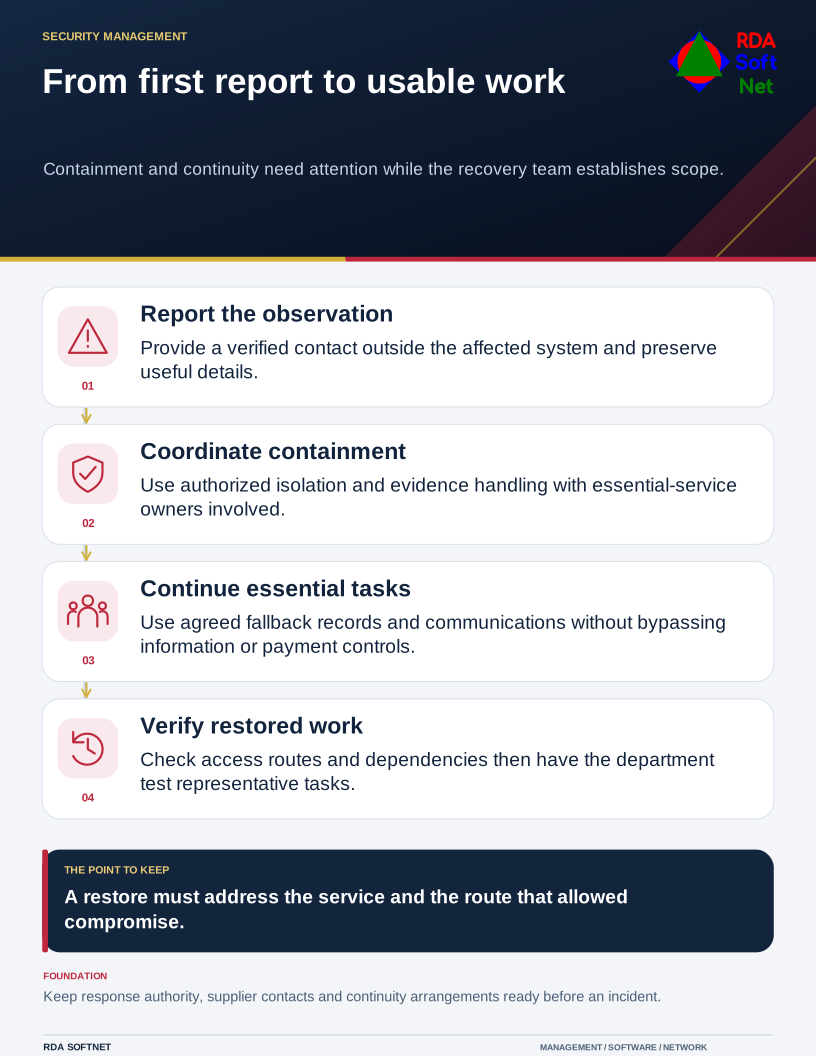
Containment and continuity need attention while the recovery team establishes scope.
Reducing damage involves more than restoring files. The organization may need to understand stolen information, unauthorized access, and changes made before the visible disruption. A recovery plan must leave room for those questions rather than treating the ransom message as the whole incident.
Give the first report somewhere to go
Keep a verified incident contact available outside the main computer system. Staff should know what to report: the affected device, time, message, and work in progress. They should avoid spreading suspicious files or experimenting with removal tools while asking others for help.
Use the incident response guide to assign containment authority, escalation, and evidence handling. Follow approved isolation instructions where appropriate. Operational equipment and essential services may require coordinated decisions rather than an improvised shutdown by an untrained user.
The FTC's breach response guidance emphasizes assembling the right team and preserving evidence. Recovery actions should be coordinated with investigation so useful information is not lost through a rushed rebuild.
Keep essential work moving safely
Ask departments what they can do while a system is unavailable and what must pause. Agree on temporary records, communications, and authorization before the incident. A fallback should not require staff to move sensitive work into personal accounts or bypass financial approvals.
The continuity guide connects these decisions with service priorities. Confirm which outside suppliers must participate and how to reach them if normal email or identity services are affected. An alternative phone number is useful only if the people assigned to it understand their role.
Do not assume a payment will restore operations or resolve disclosure. Involve the authorized leadership and appropriate response advisers in consequential decisions. The team's immediate work is to establish scope, contain access, and prepare a controlled recovery.
Restore a service and verify the work
Protect recovery copies from the same access paths used in everyday operations. Test restoring applications and information along with required identities, keys, configuration, and connectivity. NIST's ransomware risk profile provides a current framework for considering prevention through recovery together.
The backup and recovery guide helps document that test. Confirm the restored environment is suitable to return to use and have the department verify representative work. Recovering data without correcting the access route can leave the organization exposed again.
Afterward, review the timeline and assign improvements. Record which contact routes worked, which recovery dependency was missing, and what must change before the next exercise. Have the department and computer department verify those corrections together. A completed restore should leave both usable work and a clear account of what remains unresolved.