
The question "are we covered for a cyberattack?" is too broad to resolve from a policy title. An interruption at a hosted application, theft of personal information, a fraudulent transfer, and damage to your own systems can involve different terms and limits.
Take an event to the insurance conversation
Describe the service and loss before asking which policy terms address it.
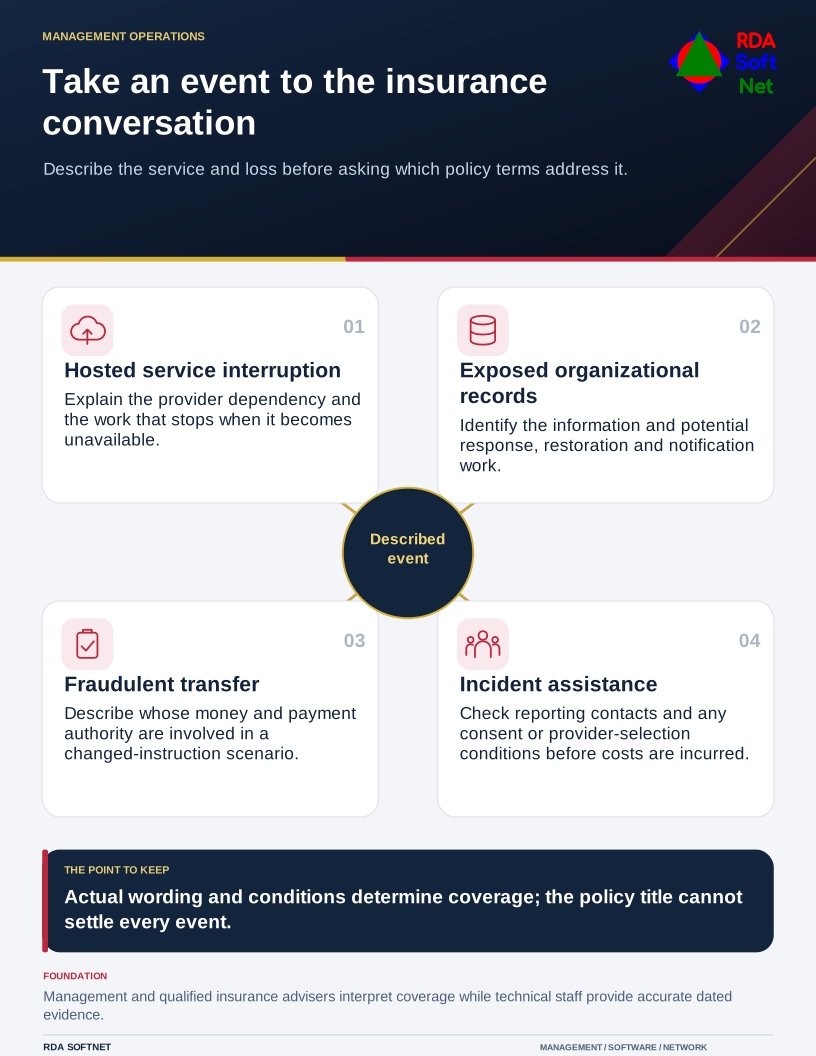
Bring the broker a description of how the organization works. IT can help explain dependencies and controls; management and finance can identify the losses the organization needs to discuss. The insurer's actual wording determines the coverage.
Describe the event before asking about the limit
List the essential services and information, including dependencies on outside providers. Ask what happens if a particular application is unavailable, records are exposed, or a supplier sends fraudulent payment instructions. State whose systems and money would be involved.
The FTC's cyber insurance guidance distinguishes first-party protection from liability involving claims by others and encourages discussion with the insurance agent. Treat those categories as questions for the conversation, not a guarantee that every related cost is included.
Ask about interruption at suppliers, incident investigation, legal support, data restoration, notification, and fraudulent transfers as appropriate to your operations. Check deductibles or retentions, sublimits, waiting periods, exclusions, reporting conditions, and any requirements to obtain consent before spending. Have the broker explain uncertain wording using the events you described.
Insurance does not make an organization compliant with its information-handling duties. It is one part of managing financial exposure. Security, records management, contractual obligations, and response planning still require their own owners.
Match answers to the environment
Technical application questions should go to someone able to demonstrate the answer. MFA being available differs from enforcement. Having endpoint software differs from arranging a response to its alerts. A successful backup job differs from a useful restore test.
Use the insurance evidence guide to collect a concise, dated record of what is in place and which exceptions remain. Describe planned improvements as planned. If a question does not fit a service identity or legacy system, explain the arrangement and seek clarification rather than stretching a yes/no answer.
Management should confirm the operating practices, including payment approvals and staff reporting. A written procedure that nobody follows should not be represented as an established control. The service review can keep those gaps visible after the renewal deadline.
Put the response conditions where people can find them
Record the insurer's contact route and relevant reporting or provider-selection conditions in the incident response plan. Keep them reachable outside the systems an incident might affect. Confirm who may contact the insurer and authorize outside assistance.
After a new service, location, acquisition, or material control change, ask the policy owner whether the broker needs an update. Keep the final submission and supporting evidence together.
RDA helps organize the technical facts and the work needed to maintain them. Coverage interpretation and insurance decisions remain with management and the appropriate insurance advisers. A productive conversation ends with specific answers and recorded uncertainties, rather than reassurance based on a product label.